The Challenge
In Vietnam science education remains heavily reliant on rote learning from textbooks, with hands-on experiments rarely part of the classroom experience (King’s Think Tank, 2025). This is particularly true in remote, underdeveloped provinces such as Lào Cai. This leaves students with little opportunity to discover that learning STEM can be fun, exciting, and relevant to their lives. Without practical exposure, they miss out on seeing how STEM skills can address everyday challenges—such as clean water, energy, or simple problem-solving in their communities. These gaps are particularly pronounced among marginalized rural and ethnic minority groups, where poor infrastructure and socio-economic barriers further limit educational outcomes and social mobility (UNICEF, 2024).
Our Response
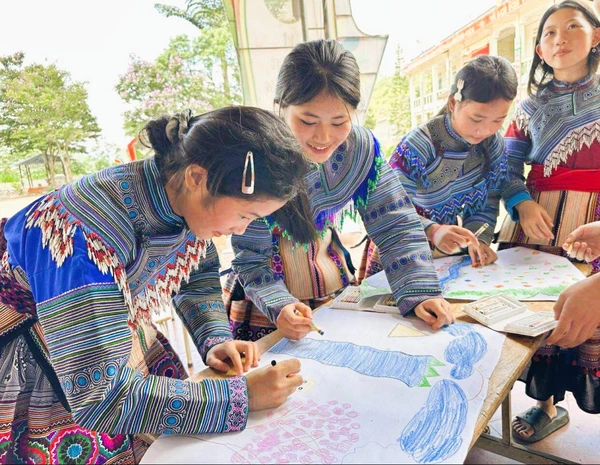
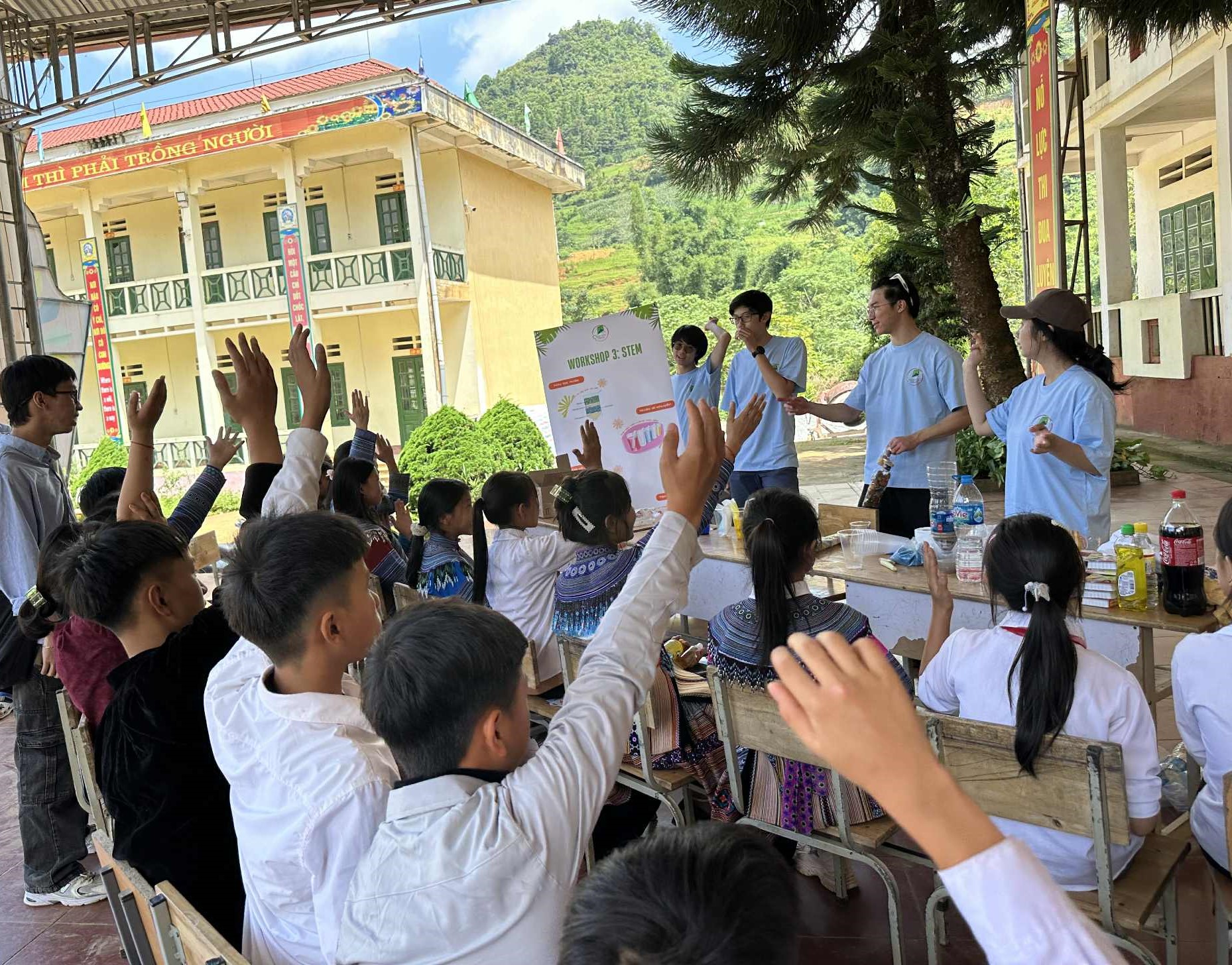
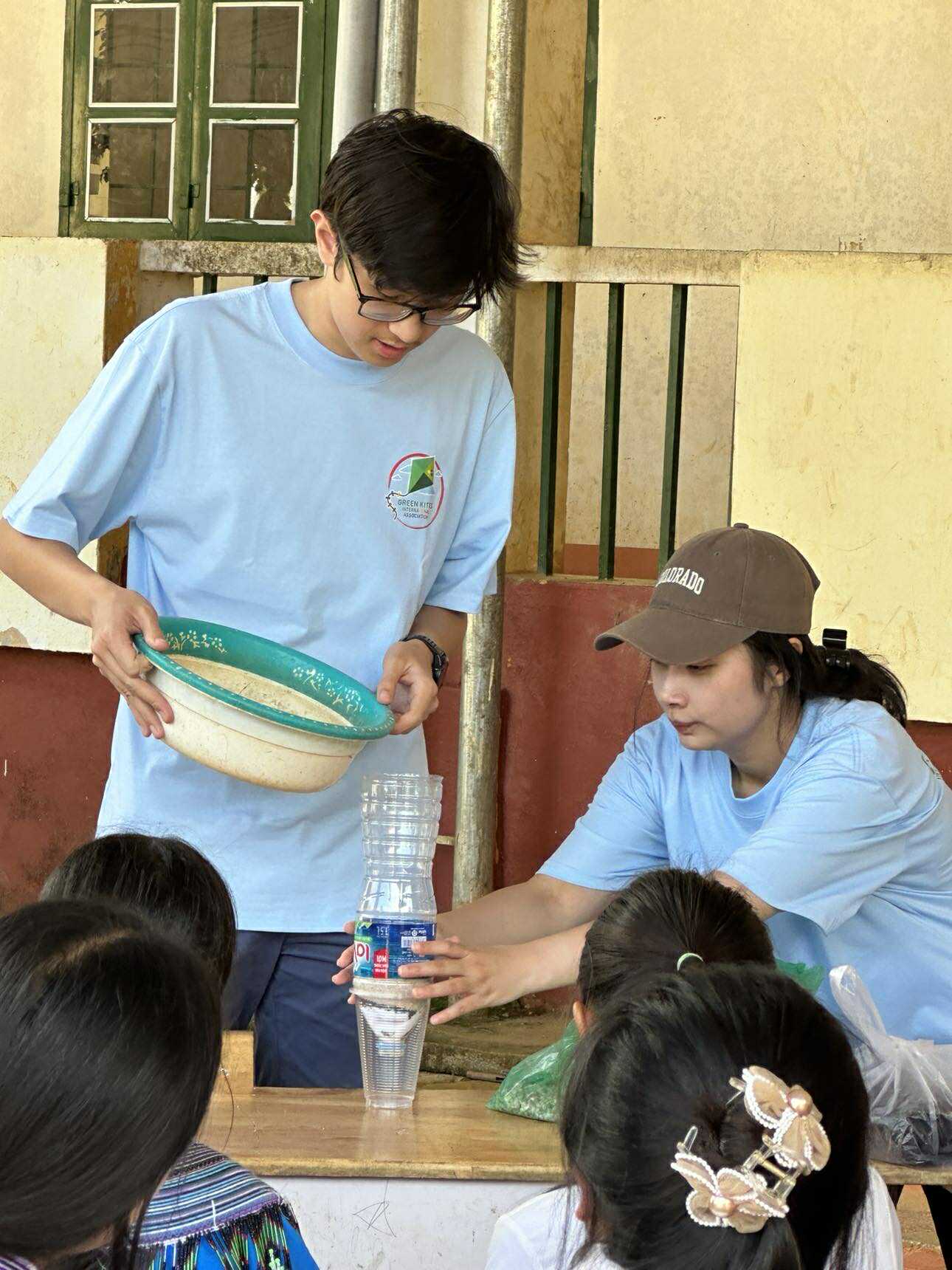
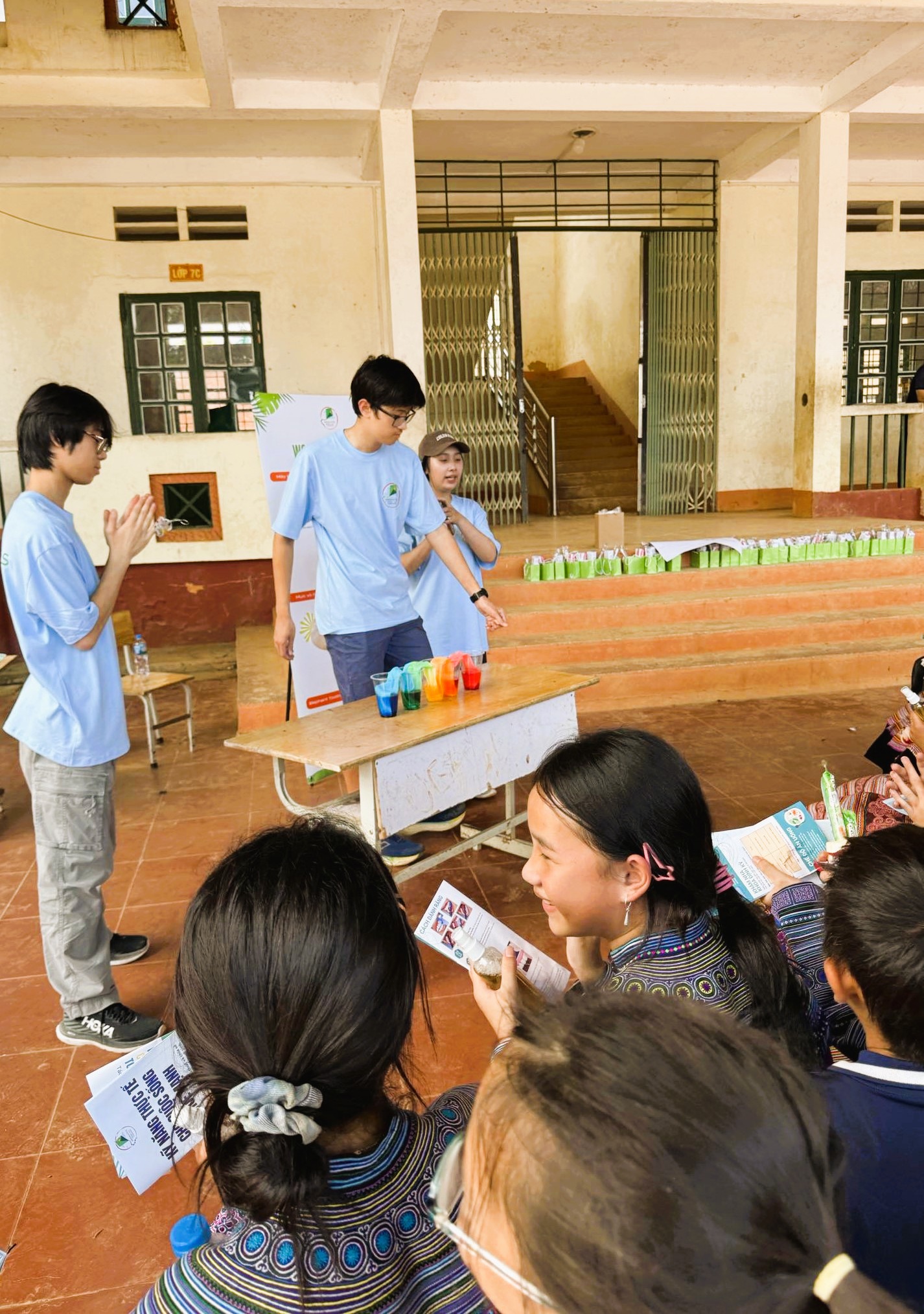
To address this, we brought vibrant, hands-on STEM learning directly into the classrooms in Lào Cai. The workshops were designed around everyday challenges, with simple experiments grouped into themes that showed how science connects to real life:
-
- Clean Water & Health: Students filtered dirty water using everyday household materials and revealed hidden messages with invisible ink, learning how chemistry can be both practical and fun.
-
- Energy & Power: They built lemon-powered batteries to light LEDs and crafted solar cookers from foil and cardboard, demonstrating how renewable energy can be harnessed with simple tools.
-
- Forces & Motion: Balloon rockets illustrated Newton’s Third Law, while pulley systems (ròng rọc) showed how simple machines make it possible to lift heavier weights with less effort. These activities helped students see how physics concepts directly apply to solving real-world problems.
-
- Chemistry in Action: Vinegar-and-baking soda volcanoes erupted with excitement, while burning magnesium dazzled students with light and heat, bringing textbook reactions to life.
-
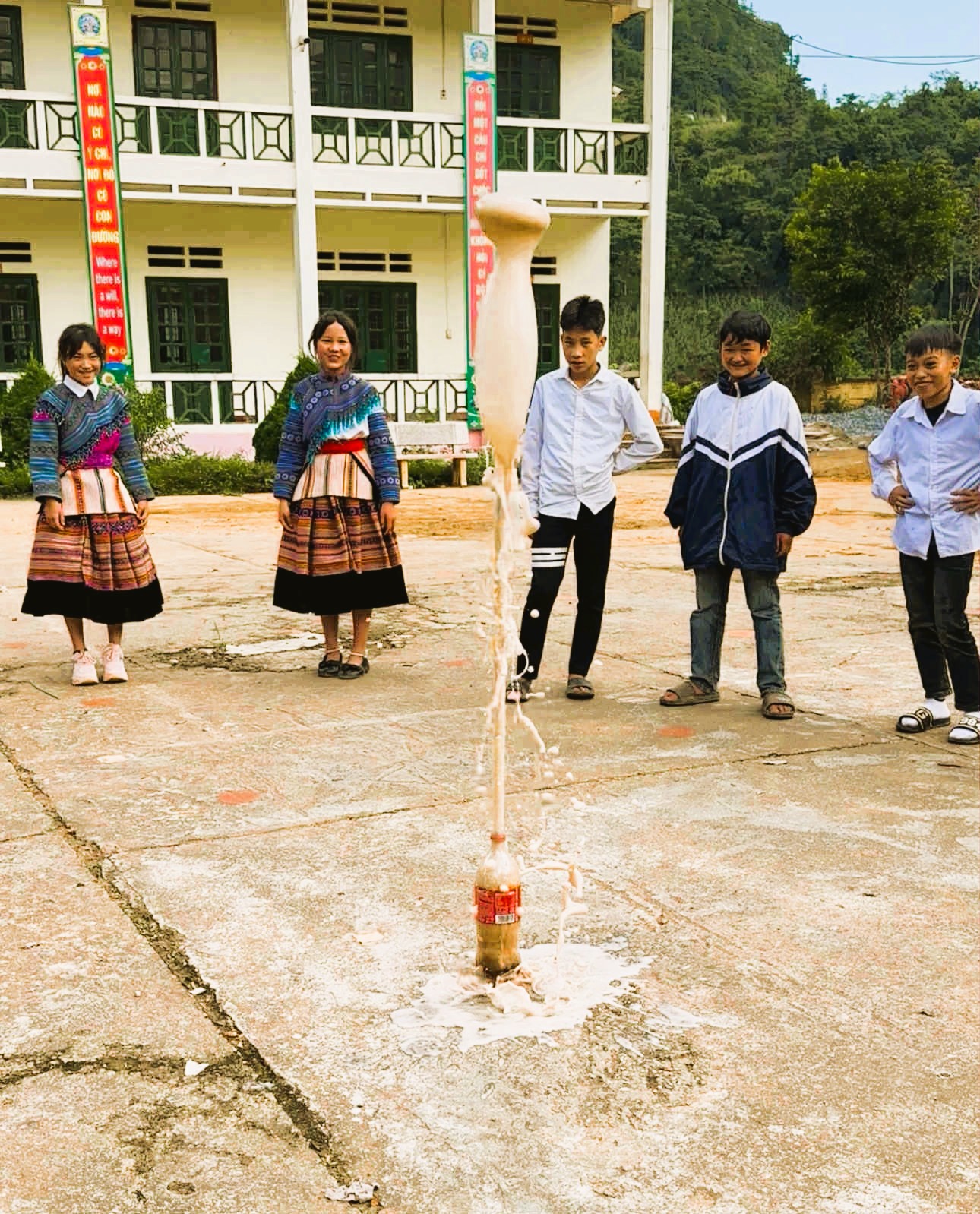
- Everyday Curiosity: Colourful walking water rainbows and a Mentos-and-Coke geyser proved that even the most ordinary materials can spark amazement.
These activities showed that learning STEM can be fun, engaging, and directly relevant—helping students see that STEM skills can address everyday challenges in water, energy, and problem-solving.
To ensure long-term impact, we also handed over a complete teaching outline to local teachers, equipping them with the knowledge and confidence to continue delivering these experiments and keeping STEM education alive in their classrooms.
Educational Resources
Click below to read our e-books & other teaching resources:
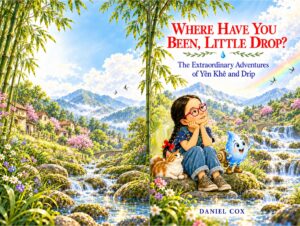
“Where Have You Been, Little Drop?”
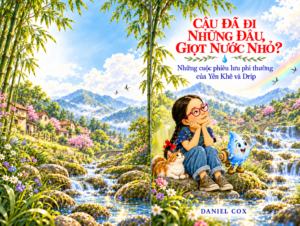
“Yên Khê và hành trình kỳ diệu của những giọt nước” – Vietnamese language version of “Where Have You Been, Little Drop?”
“Water at Our School” Bilingual 12-lessons teaching resource
‘Through Yên Khê and Drip’s adventures, “Where Have You Been, Little Drop?” brings science to life through art, imagination and storytelling, inviting children to discover the wonders of the water cycle with curiosity, laughter and a sense of adventure.
“Where Have You Been, Little Drop? is freely available to download from the Green Kites website. Both English and Vietnamese editions are also shared with children and teachers at schools where Green Kites has installed water systems, alongside Water at Our School, a companion teaching resource.”
Our Impact
The energy in the room/school yards turned classrooms from places of memorization into hubs of exploration. Students laughed, gasped, and marvelled at science coming alive. cai nay viet lai gian di hon Our Impact The energy in the classrooms and schoolyards transformed traditional learning spaces into vibrant hubs of exploration. Students laughed, gasped in amazement, and simply had fun as science came alive before their eyes.
By combining interactive workshops, hands-on activities, and educational resources, Green Kites transforms health knowledge into practical skills students can apply at school, at home, and within their communities.