The challenge
Vietnam has abundant water resources, with more than 2,000 rivers and average annual rainfall of approximately 1,940 mm (World Bank, 2021). Yet many rural, mountainous and ethnic minority communities still lack reliable access to safe water, sanitation and hygiene facilities.
By 2020, only around 51% of rural households had access to clean water that met national standards, while 75% had access to hygienic latrines (UNICEF & MARD, 2021). Conditions are often more severe in ethnic minority communities. A 2023 UNICEF study found that 40% of households reported reduced access to drinking water, while some groups experienced supply interruptions lasting several months each year (UNICEF, 2023).
Many communities lack piped water systems and depend on unreliable or contaminated sources. Limited sanitation facilities, inadequate handwashing stations and poor hygiene infrastructure further increase the risk of illness and reduce the dignity and wellbeing of children and families.
The situation in schools is particularly concerning. UNICEF estimates that 7.7 million children in Vietnam attend schools without running water or functioning toilets (UNICEF, 2019; Children of Vietnam, 2020). Following the COVID-19 pandemic, reports indicated that approximately 30% of schools lacked running water or soap, leaving nearly six million students without access to basic hygiene facilities (DTiNews, 2020).
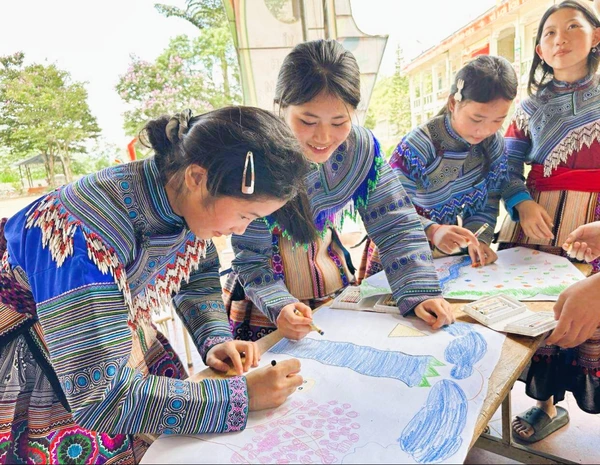
For students, inadequate WASH facilities affect more than health. They influence attendance, concentration, confidence and dignity. Girls may miss school during menstruation when toilets, sinks, clean water and soap are unavailable.
How our WASH model developed
Green Kites International Association set out to design practical, low-cost, and community-driven solutions that could be replicated across schools.
When Green Kites first began its water work in 2023, our approach was relatively simple. We installed an off-the-shelf water-filtration system at Ama Trang Lơng Primary School in Cư M’gar, Đắk Lắk, believing that access to filtration equipment would largely solve the school’s water problem.
Once we began working on-site, however, we realised that the challenge ran much deeper.
In an environment where water was scarce and unreliable, basic sanitation practices had also been affected. Handwashing was often neglected because water was not always readily available. More concerningly, many children had become accustomed to drinking visibly contaminated water and did not necessarily recognise it as unsafe.
We also found that large-capacity community filtration systems had previously been installed through government programs, but some had fallen into disuse. Without sufficient local ownership, maintenance arrangements, training and trust in the systems, the infrastructure alone had not produced lasting change.
This experience fundamentally changed Green Kites’ approach. We realised that a water project could not focus only on installing equipment. It needed to become a complete WASH project, addressing water, sanitation and hygiene together.
We therefore developed a holistic WASH model built around four connected pillars:
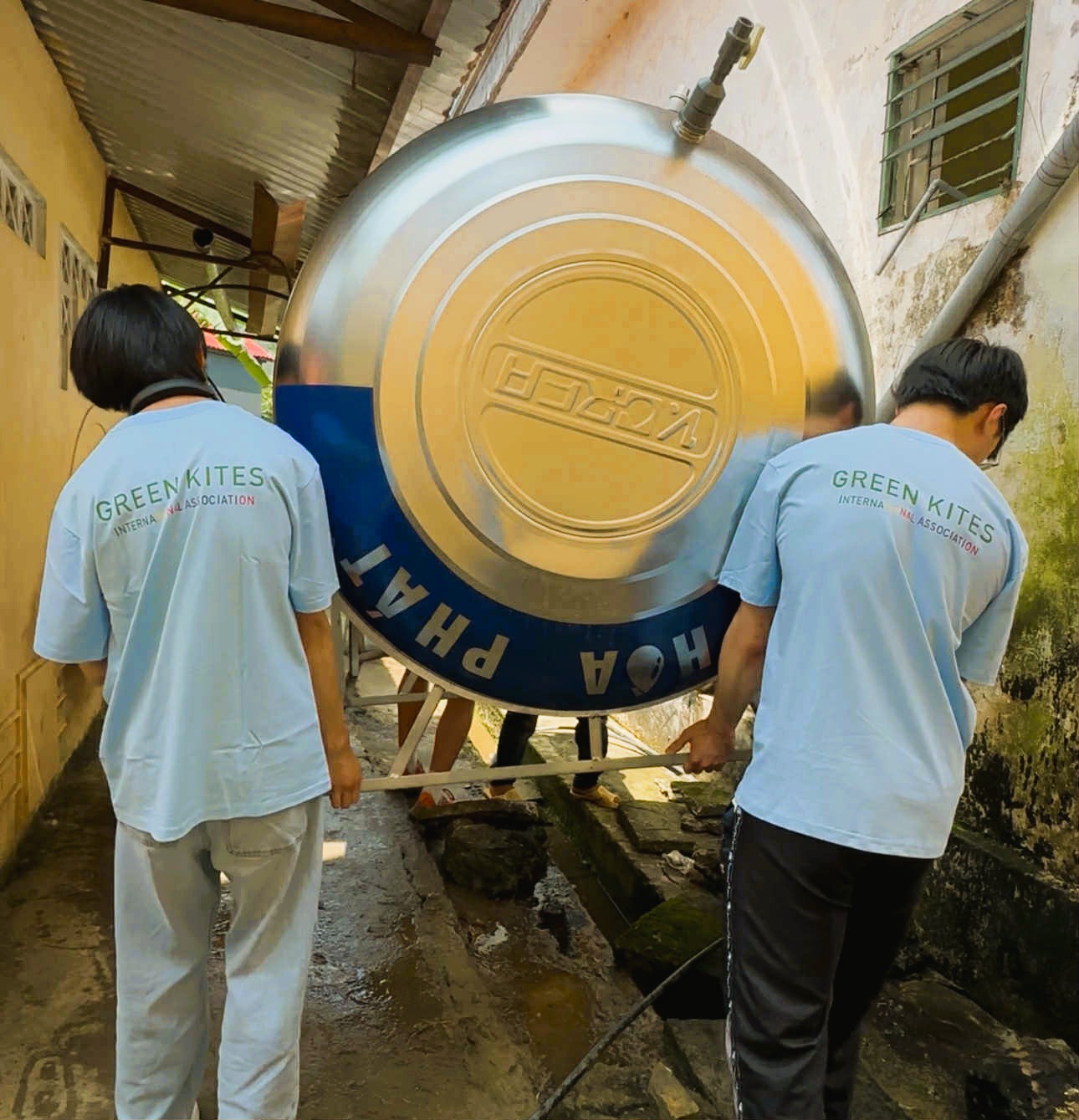
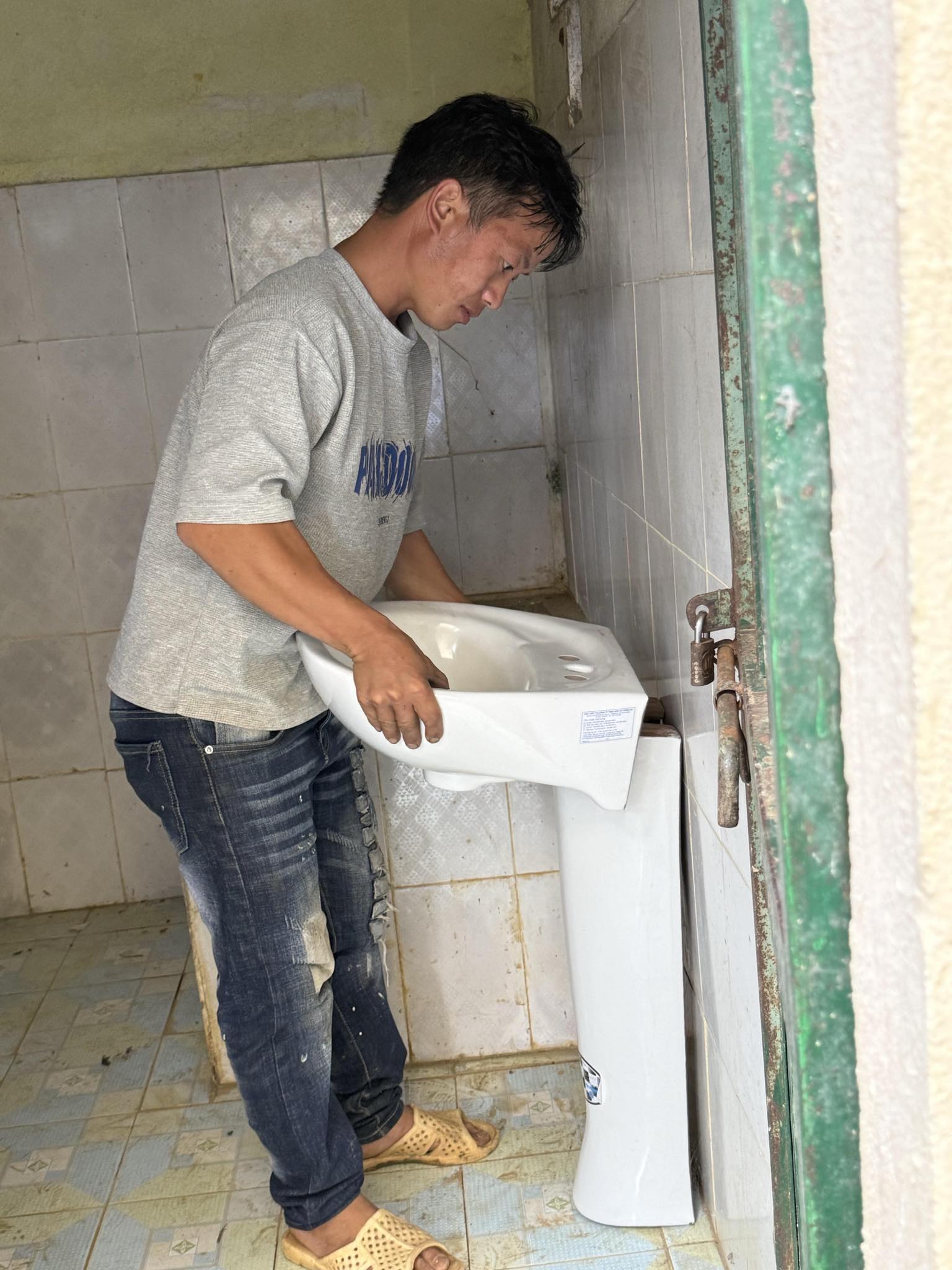
⦁ Install: Design and install locally appropriate water-harvesting, storage and filtration systems.
⦁ Educate: Teach children about water science, hygiene, sanitation, water safety and conservation.
⦁ Sustain: Train local partners, monitor system performance and support long-term operation and repairs.
⦁ Amplify: Extend our impact through public campaigns, university and conference talks, podcasts, annual art exhibitions, and the publication of original children’s books and teaching resources.
Our first pillar: Install
Design and install locally appropriate water-harvesting, storage and filtration systems.
WATER FILTRATION SYSTEM
Groundwater is often available in Đắk Lắk, but it is frequently contaminated with bacteria, sediment, or agricultural runoff. For this reason, installing a filtration system that makes existing sources drinkable (whether groundwater or piped water) is often more reliable than depending on rainwater harvesting.
Our Impact
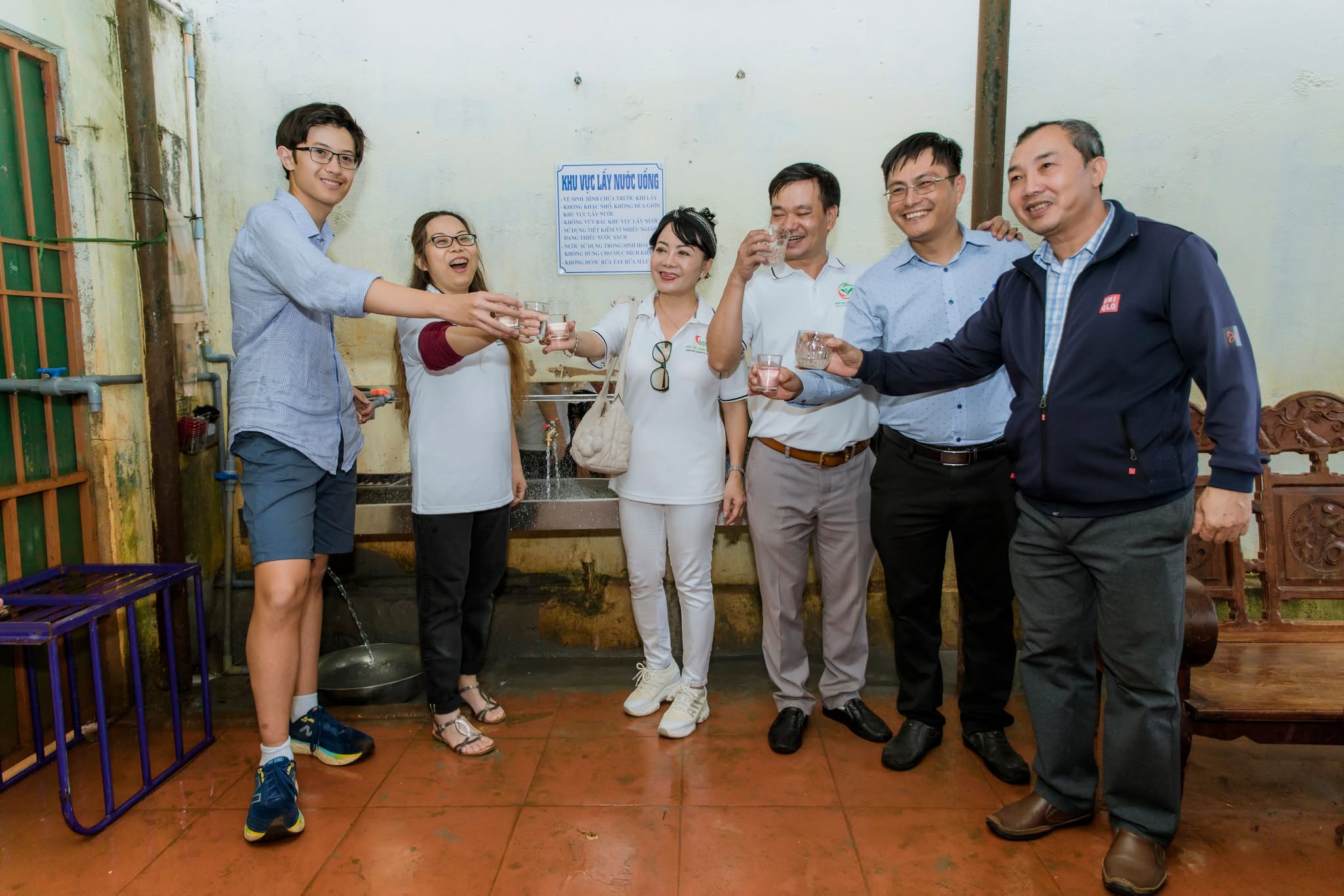
In 2024, we funded the installation of a clean-water filtration system at Ama Trang Lơng Primary School in Cư M’gar. For the school’s 313 students, this meant that, for the first time, they could drink safely and confidently from a tap. Filtered water is also brought directly to each classroom, ensuring that students have convenient access to safe drinking water throughout the school day.
WATER HARVESTING SYSTEM – The Gutter System
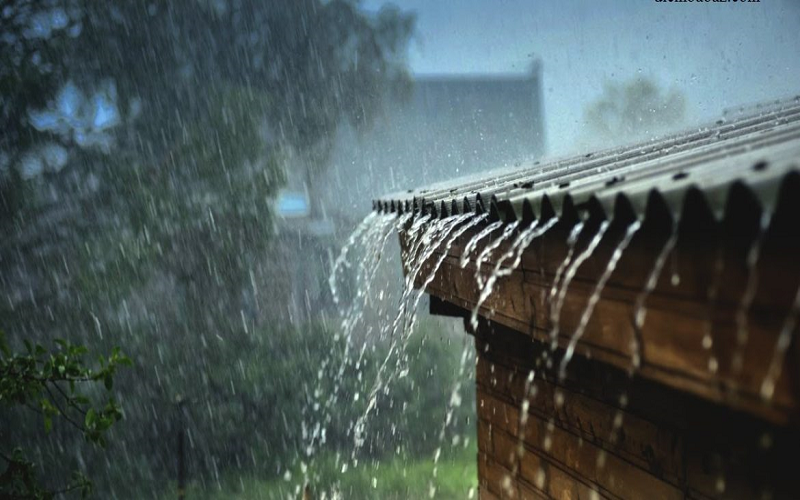
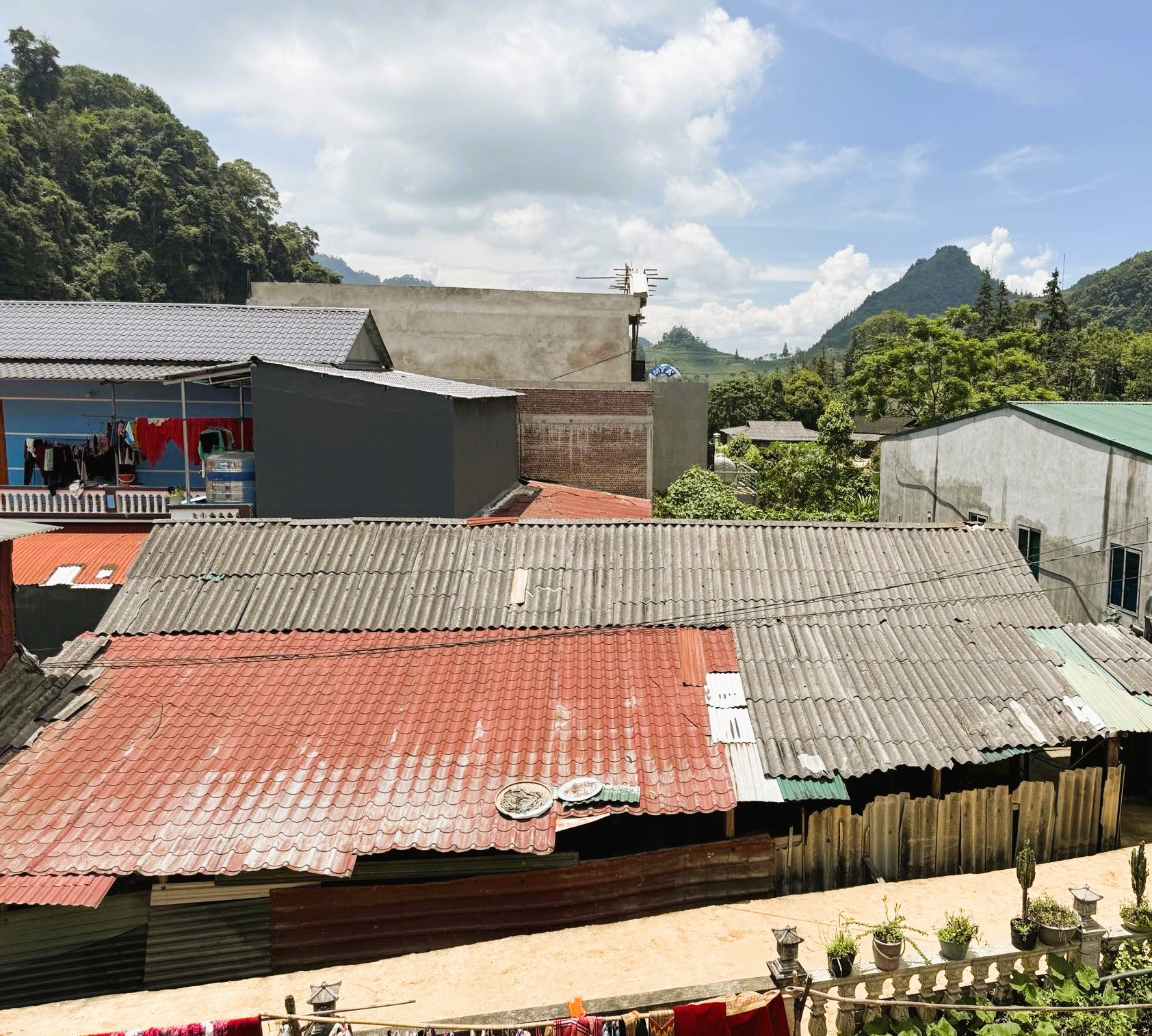
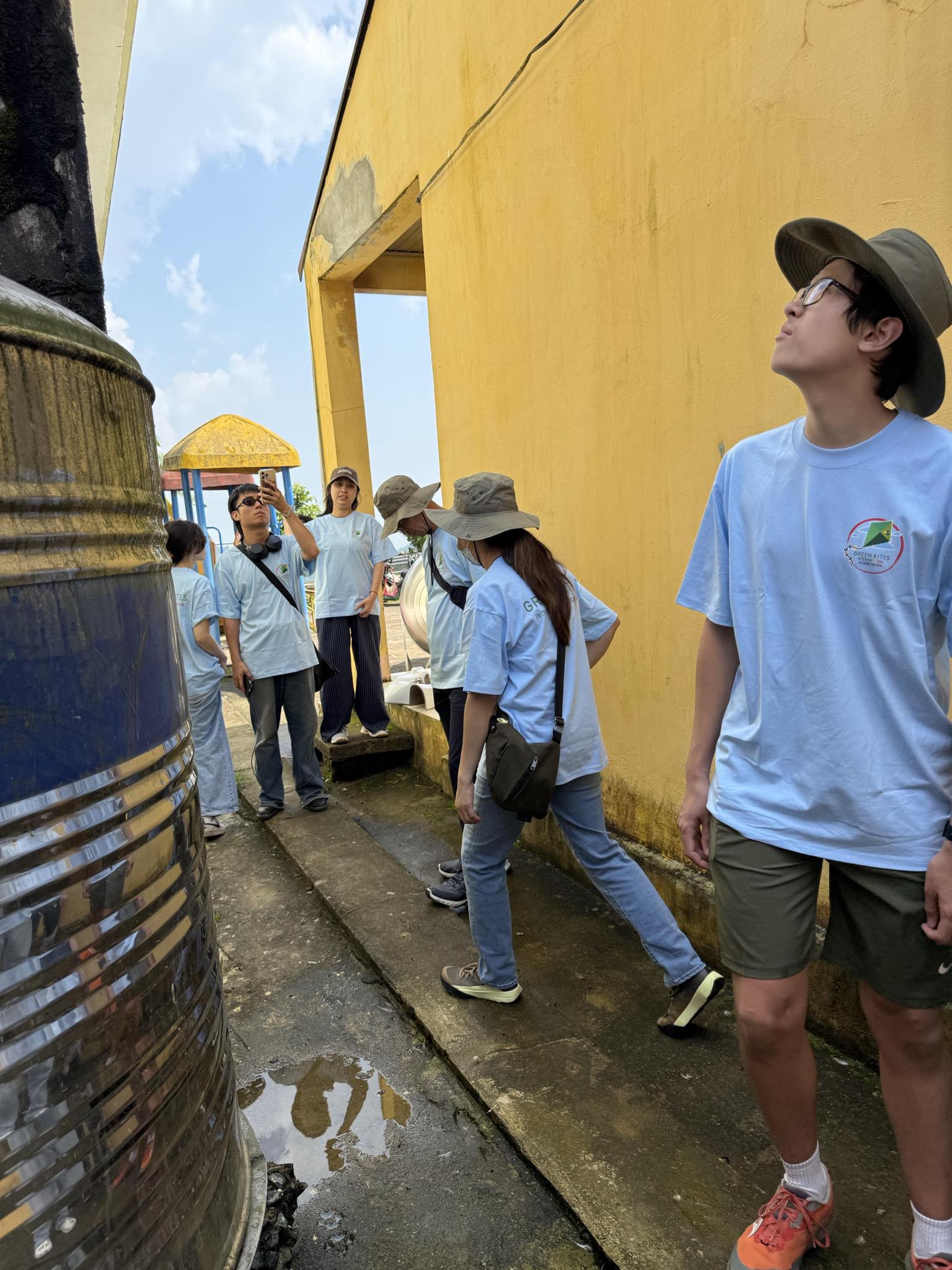
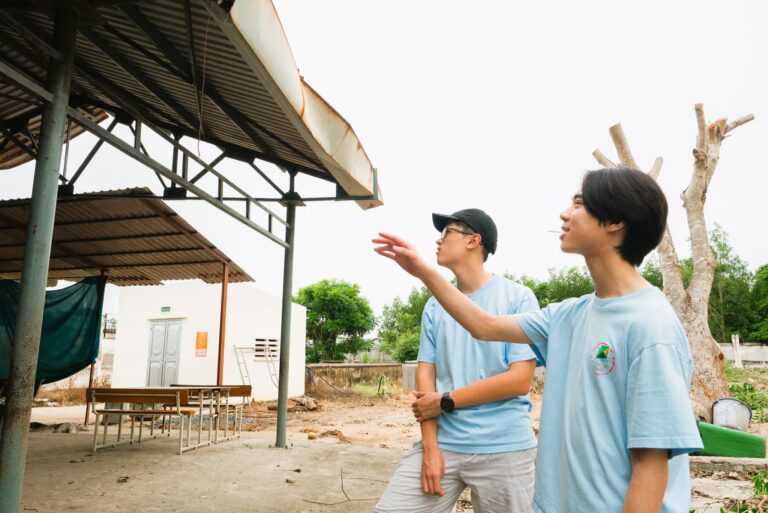
In many rural provinces of Vietnam, water scarcity is an everyday struggle. Despite heavy seasonal rains, households and schools lack the infrastructure to collect and store water effectively. Most homes do not have gutters, and families rely on small plastic tanks or even buckets to catch rain directly. Traditionally, some households also use large clay jars (chum) as storage vessels, but their capacity is limited—typically 200–400 litres each, enough for only a few days of household use. Small tanks are also common, with capacities ranging from 500 to 1,000 litres. During GKIA’s 2024 field trips, Daniel Cox observed that in Dak Lak—and later in Lào Cai—virtually no houses or schools were equipped with proper guttering or rain-harvesting systems. This means that valuable rainwater, which could be stored for drinking, hygiene, and agriculture, is lost.
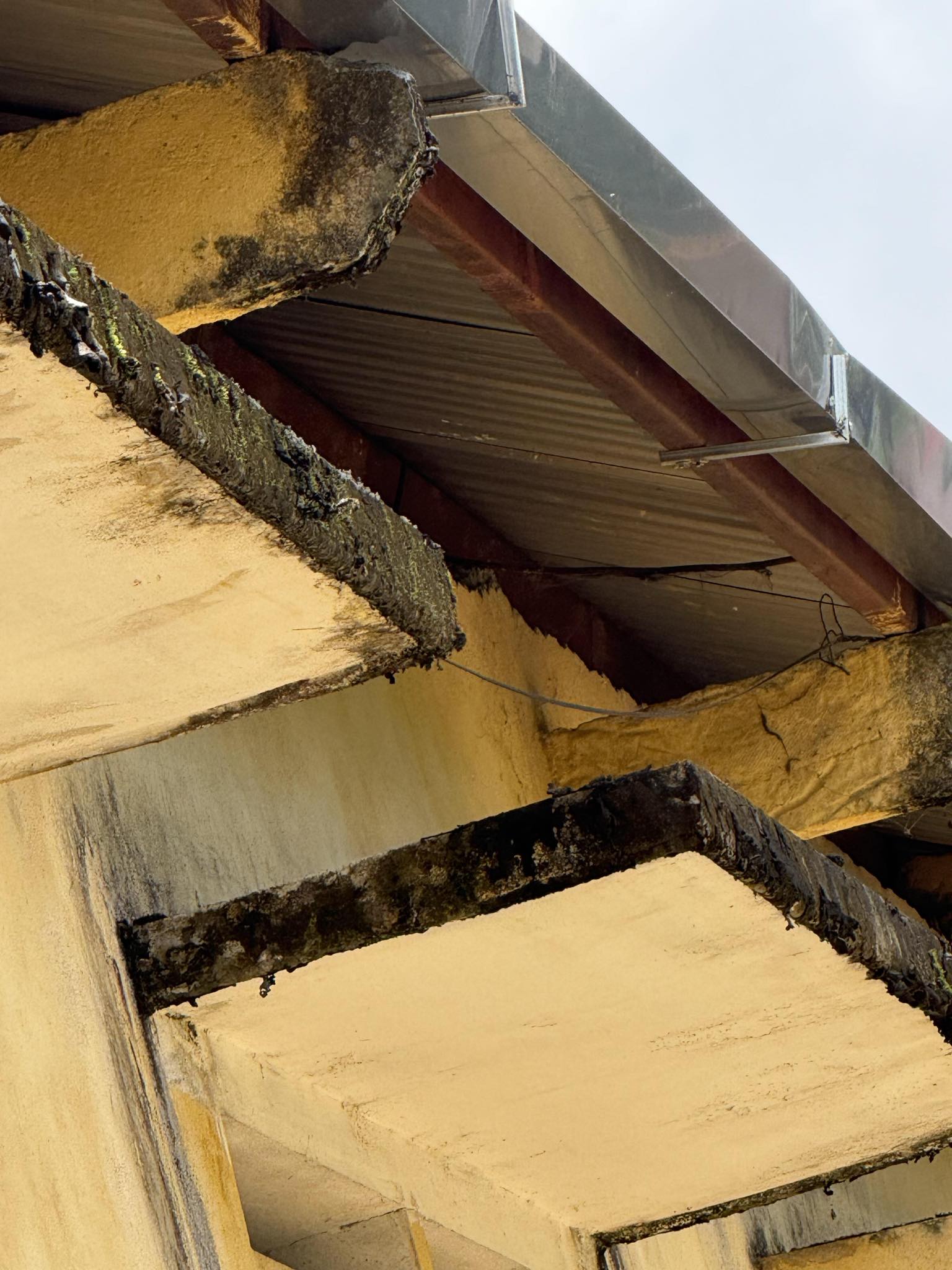
Roofs of both old and new houses with no gutter systems in Lào Cai
Our Solution
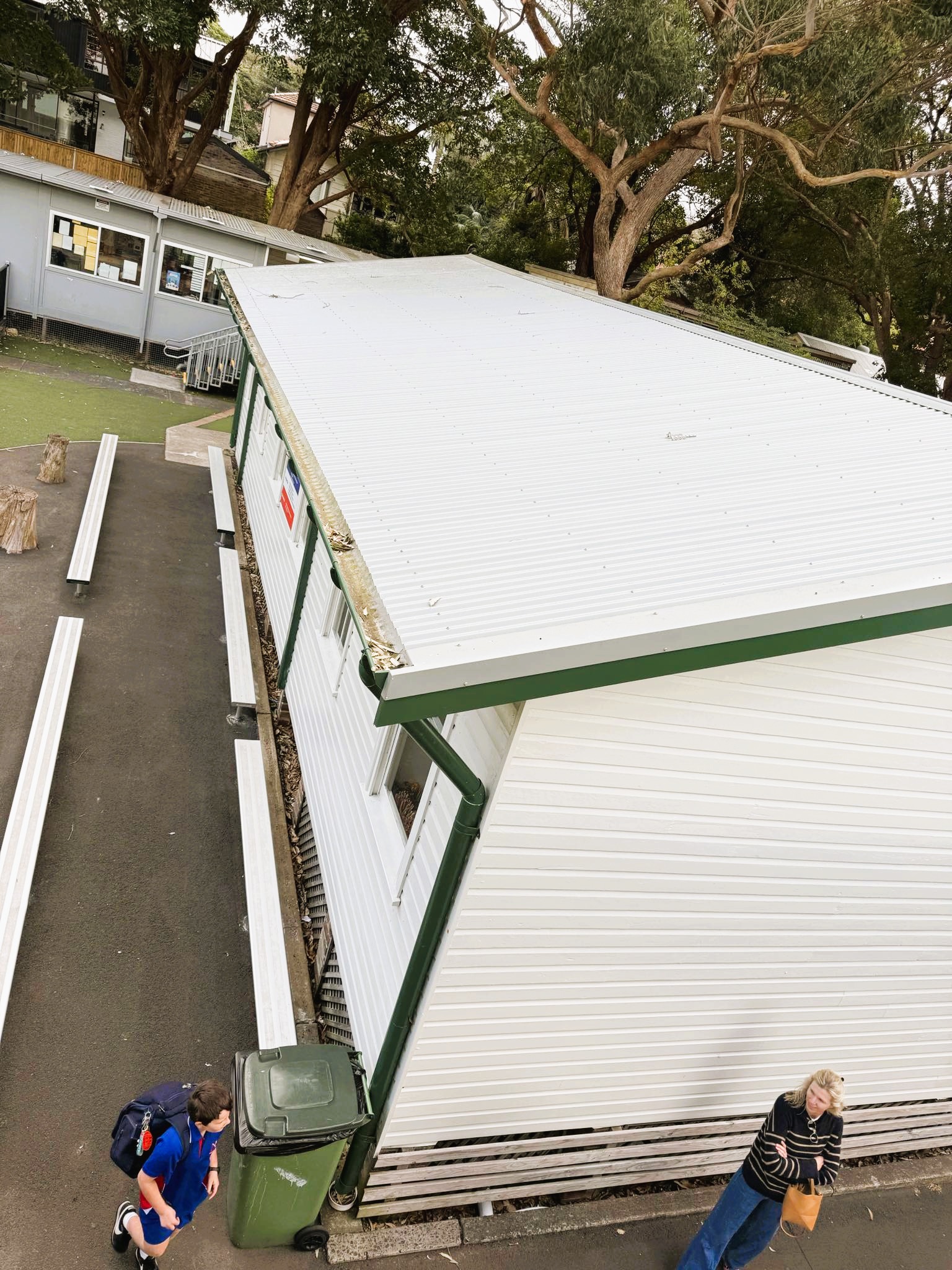
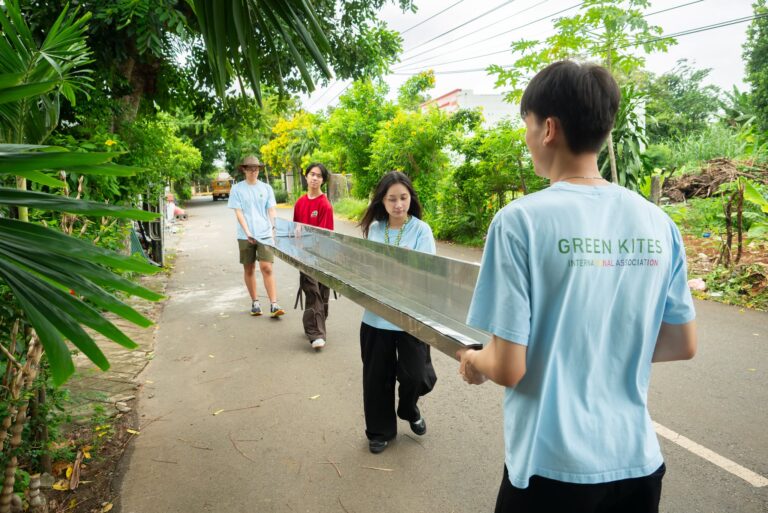
Daniel designed a universal gutter system that can be easily made and installed on any type of roof, regardless of size or material. To explain the concept, Daniel used photographs of gutter systems at a school in Sydney and worked with local partners to demonstrate how gutters could be built and fitted.
A single 20 m² roof can theoretically collect about 200 litres of water from 10 mm of rainfall, with slightly less in practice due to system losses. A 4,000-litre tank can be topped up in a few downpours, providing a steady reserve for handwashing and toilet flushing at schools.
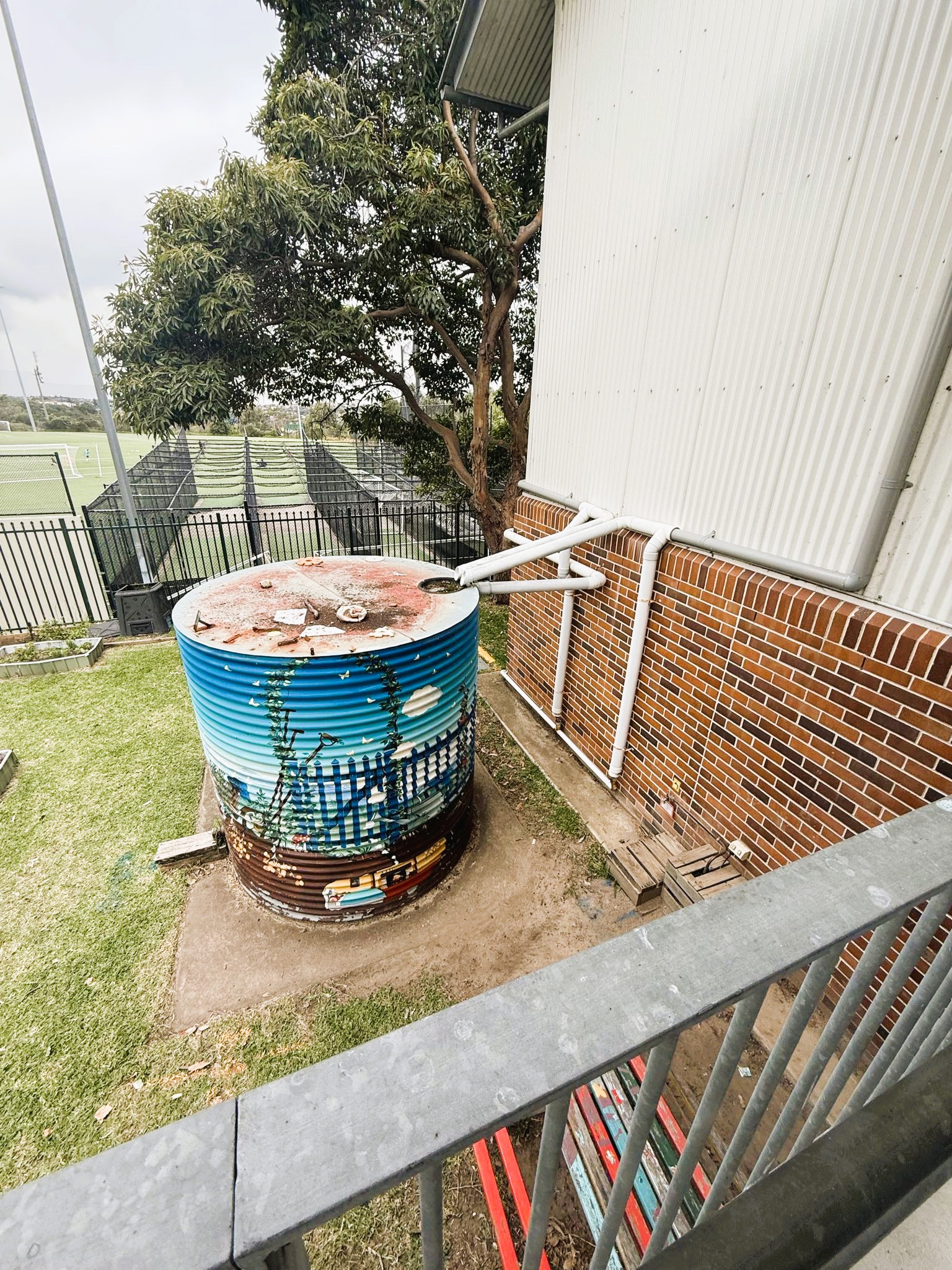
Photos of the gutter system at Northbridge Public School in Sydney, Australia, were used as a visual reference to explain the gutter system to our Vietnamese partners and the schools
Daniel developed a universal gutter design adaptable to all roof types, regardless of size or material
The design moved from concept on paper to practical installation at a school
Our Impact
The impact of installing rain water harvesting systems was immediate, leading to access to safe, hygienic toilet facilities, improved health, reduced absenteeism, and greater energy for learning and play.
Green Kites Water Harvesting System has been installed at the following schools:
⦁ Lào Cai – Sín Chéng Kindergarten and Primary School: 85 students and teachers
⦁ Lào Cai – Bản Mế Primary and Secondary School: 429 students and 22 teachers
⦁ Lào Cai, Y Tý – Sim San 1 Preschool: 50 students and teachers
⦁ Tuyên Quang – Tân Lập Commune Elementary Boarding School: 255 students and 24 teachers
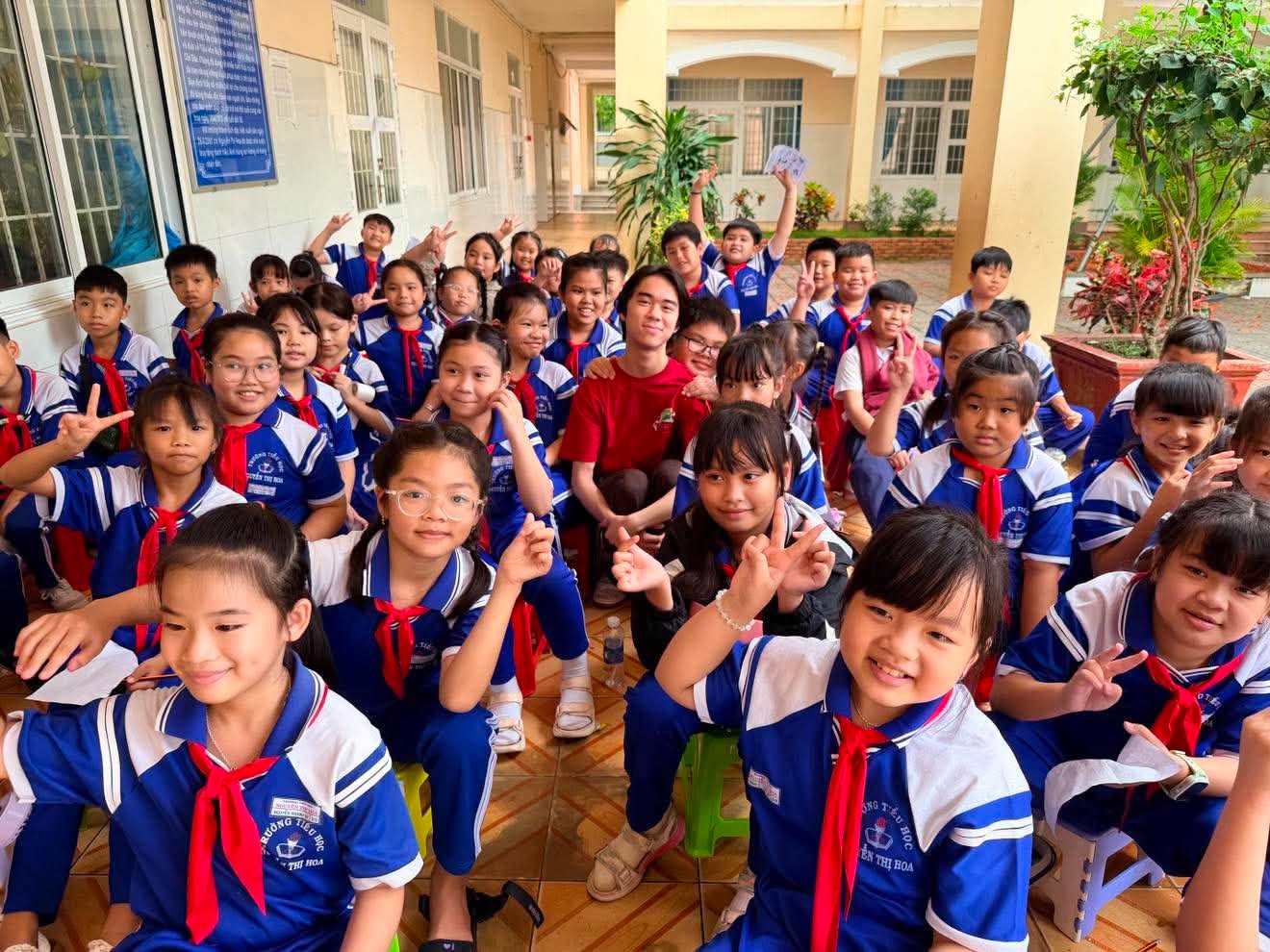
⦁ Vũng Tàu, Đất Đỏ – Nguyễn Thị Hoa Primary School: 250 students and 27 teachers
⦁ Vũng Tàu, Đất Đỏ – Láng Dài Primary School: 250 students and 25 teachers
Total beneficiaries across these six schools: 1,417 students and teachers.
This gutter project now serves as a scalable model that Green Kites will replicate across rural Vietnam, unlocking rainwater as a sustainable, low-cost resource in regions where access to clean water remains limited.
Our second pillar: Educate
Teach children about water science, hygiene, sanitation, water safety, emergency preparedness and conservation.
Water Science and Conservation Workshop
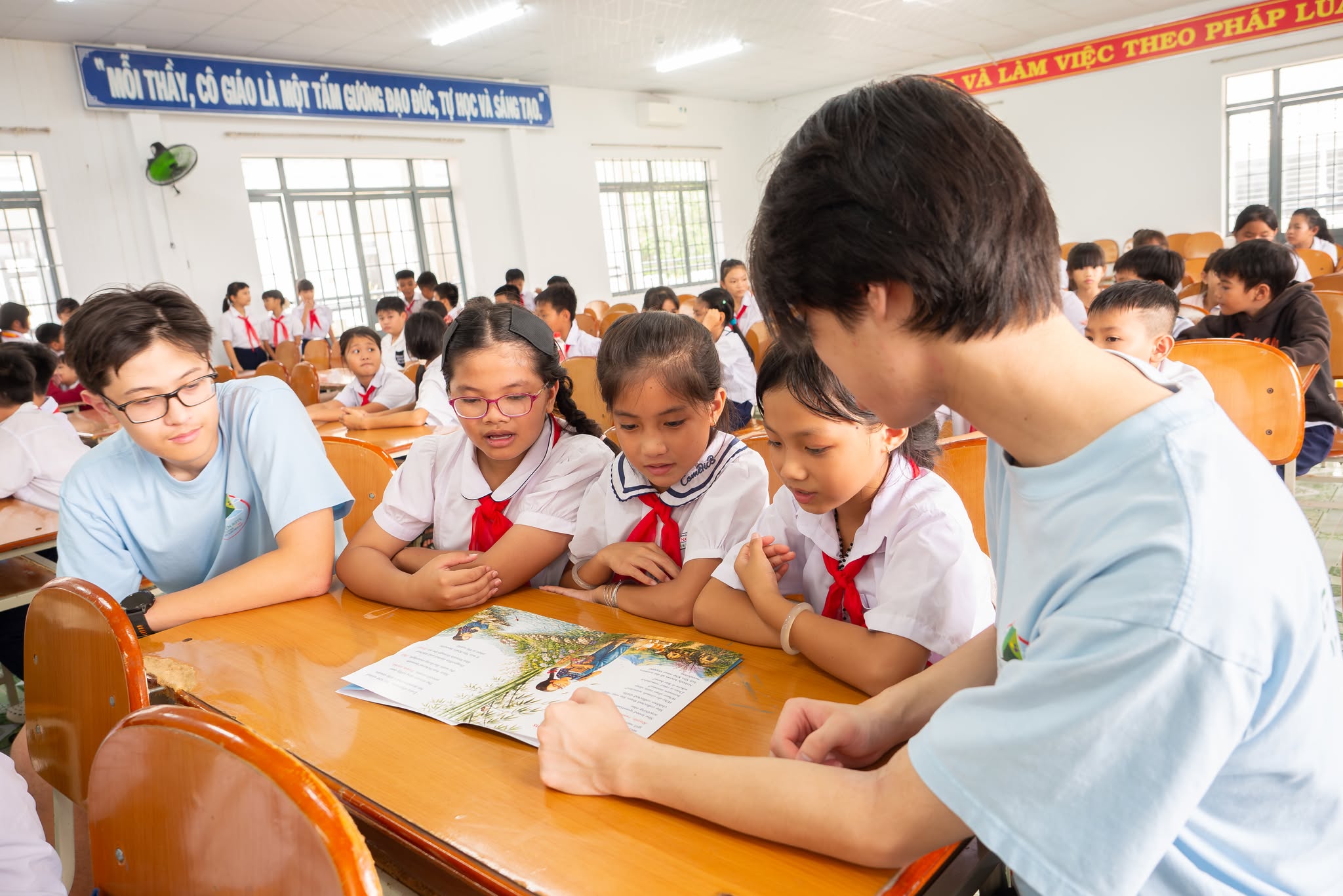
Led by Daniel Cox, the workshop teaches students about the water cycle, why freshwater is a precious and finite resource, and how everyday choices can help conserve it. Through hands-on activities, students also learn how to filter dirty water using simple, locally available household materials.
Hygiene and Sanitation Workshop
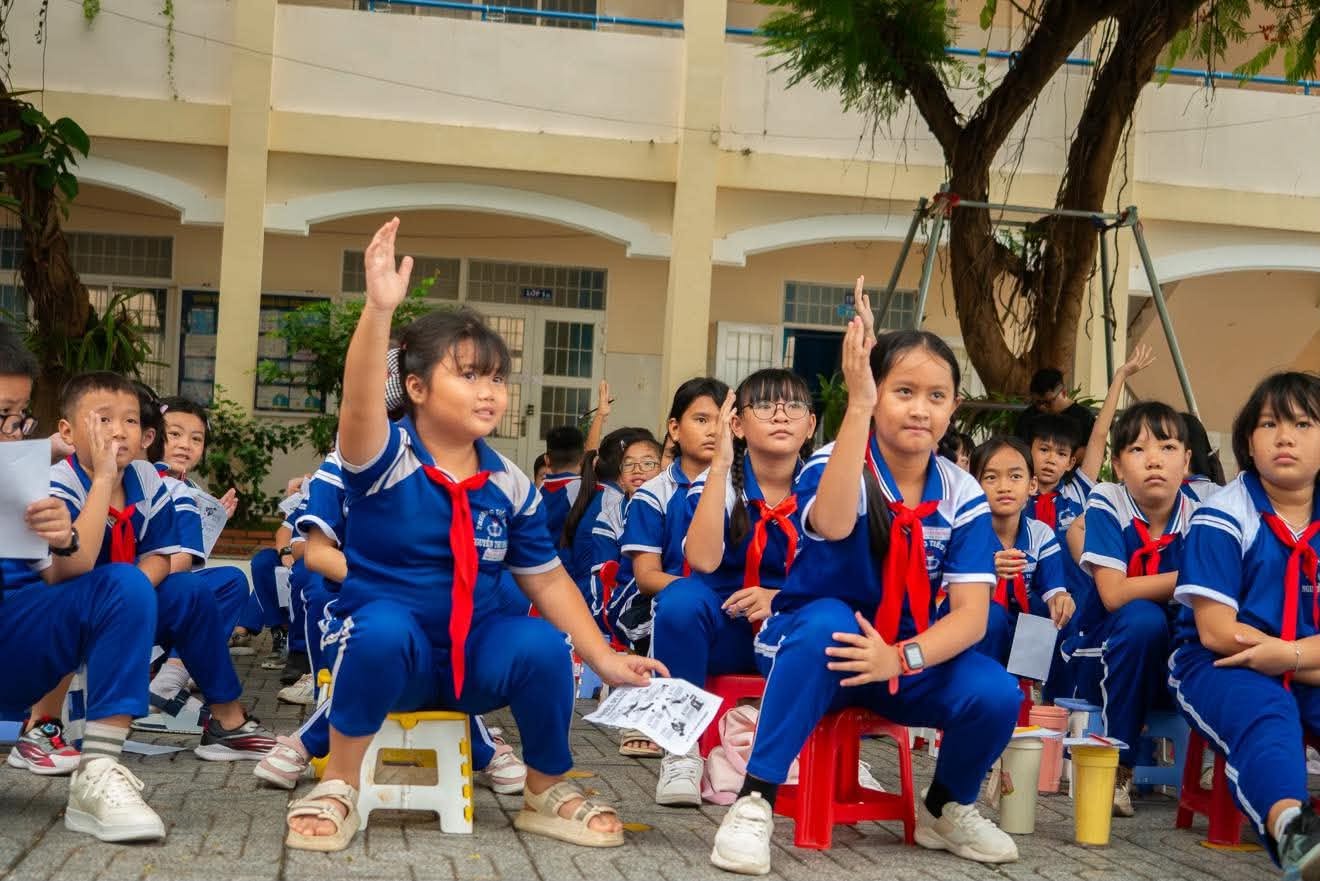
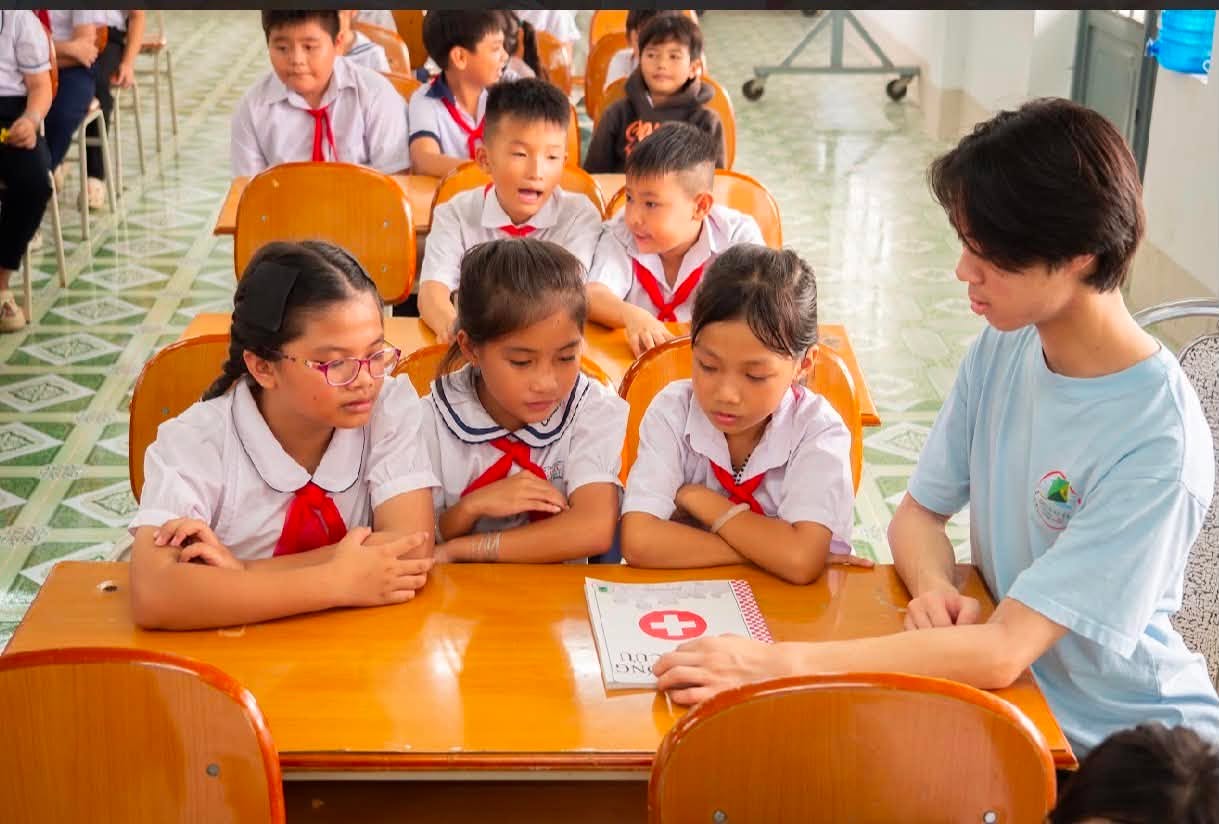
Led by Sean Pham, Green Kites strengthened its commitment in 2025 to improving child health in underserved communities across Vietnam by developing a practical and sustainable hygiene education program. Through our Healthy Future program, children learn proper handwashing, personal hygiene, safe sanitation practices and disease prevention through engaging, hands-on workshops.
A signature activity teaches students how to make their own handwashing liquid using environmentally friendly, locally available ingredients such as lemongrass, soapberries, and lemon leaves. By combining traditional knowledge with simple public health practices, children learn that effective hygiene does not require expensive products—only practical knowledge and accessible resources.
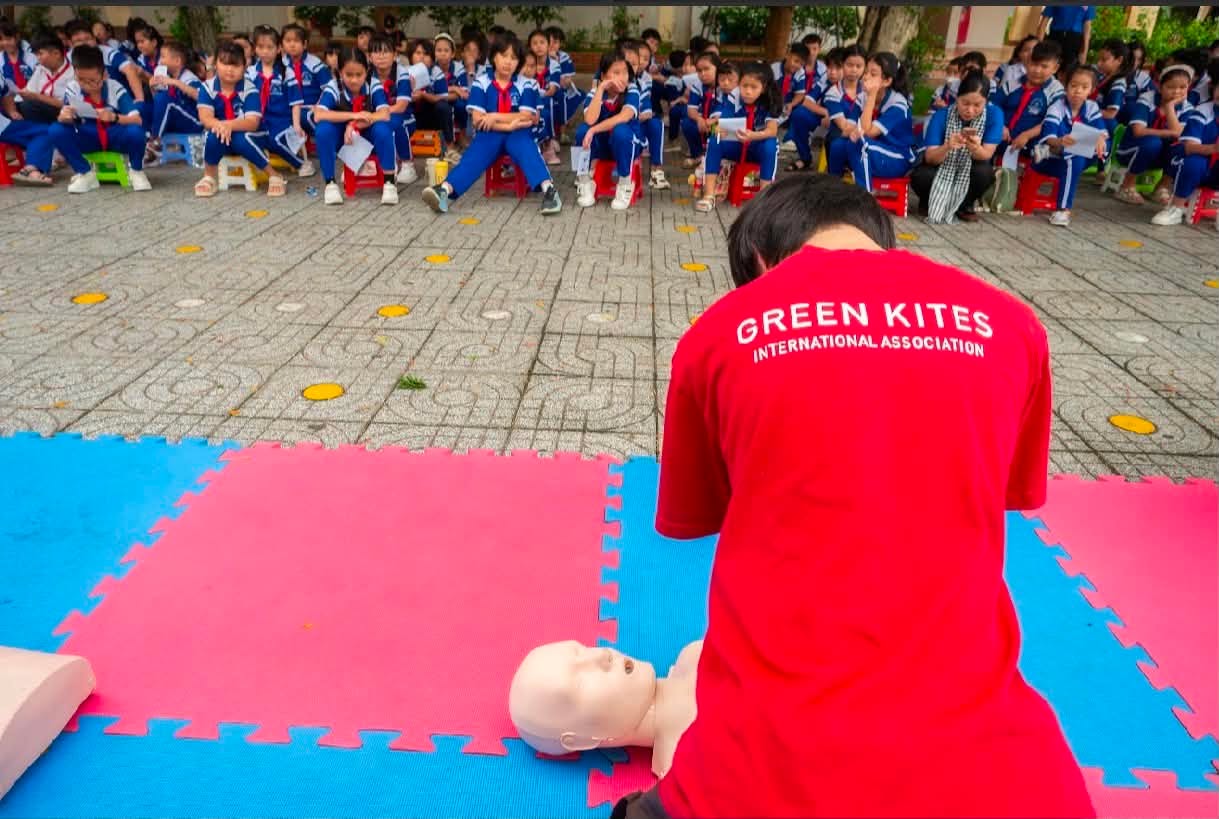
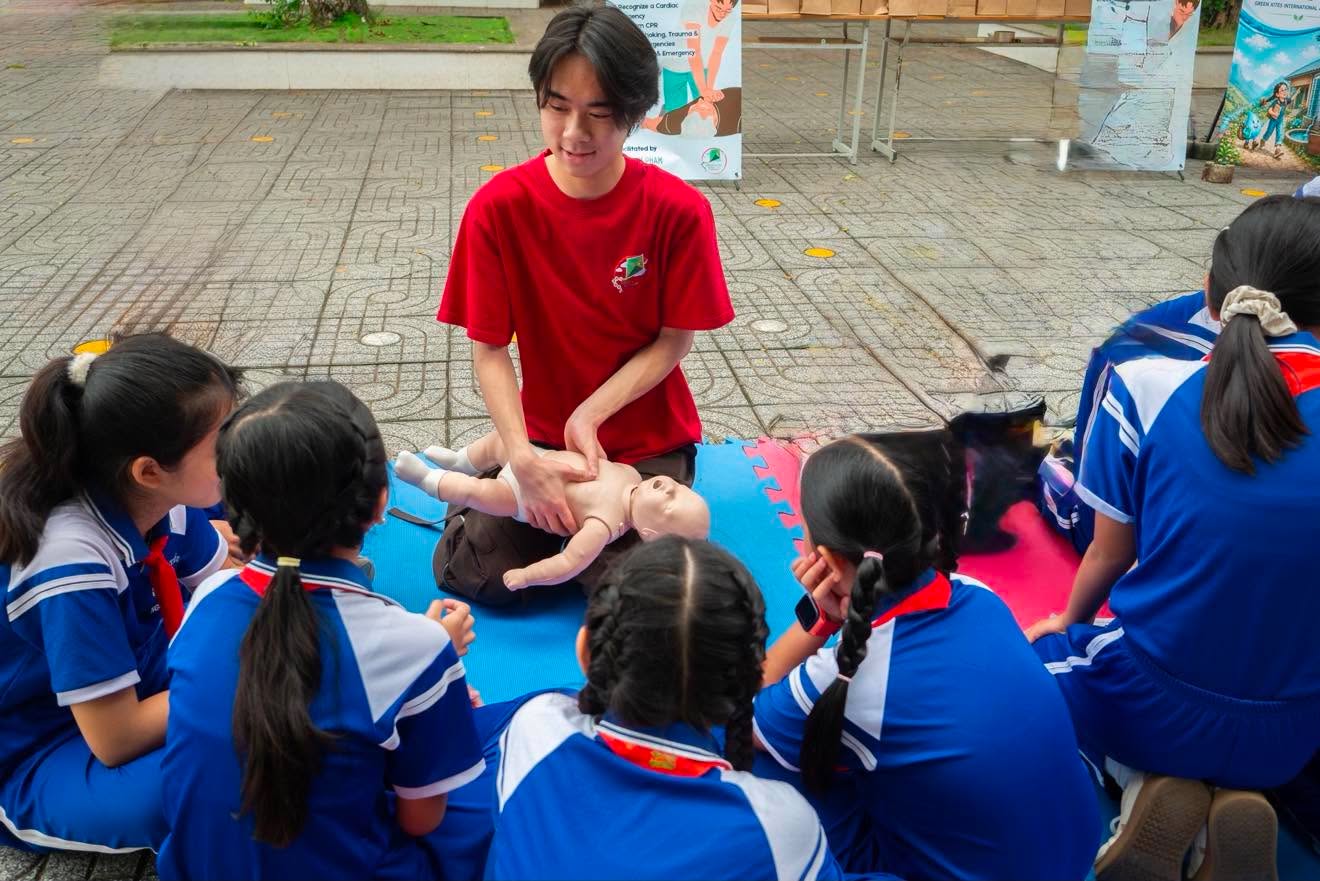
Water Safety and Emergency Preparedness Workshops
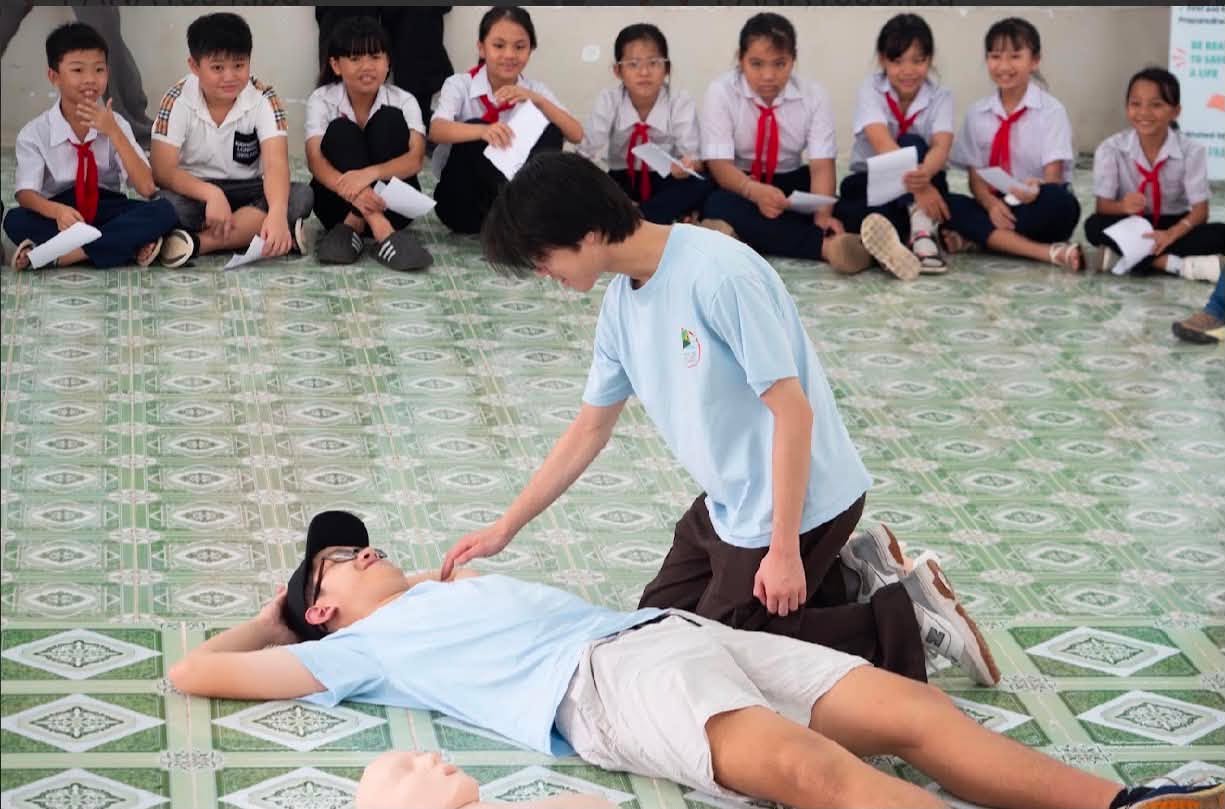
Led by William Pham, these workshops combine practical demonstrations with hands-on activities to build confidence and preparedness. Children develop essential water and life-saving skills through interactive workshops on water safety, emergency preparedness, first aid, and CPR awareness. Practical instruction builds confidence and equips children with knowledge that can reduce the risk of drowning in communities where rivers, ponds and other open-water environments are part of everyday life.
Our Impact
In 2024, we funded the installation of a clean-water filtration system at Ama Trang Lơng Primary School in Cư M’gar. For the school’s 313 students, this meant that, for the first time, they could drink safely and confidently from a tap. Filtered water is also brought directly to each classroom, ensuring that students have convenient access to safe drinking water throughout the school day.
The impact of installing rain water harvesting systems was immediate, leading to access to safe, hygienic toilet facilities, improved health, reduced absenteeism, and greater energy for learning and play.
Green Kites Water Harvesting System has been installed at the following schools:
⦁ Lào Cai – Sín Chéng Kindergarten and Primary School: 85 students and teachers
⦁ Lào Cai – Bản Mế Primary and Secondary School: 429 students and 22 teachers
⦁ Lào Cai, Y Tý – Sim San 1 Preschool: 50 students and teachers
⦁ Tuyên Quang – Tân Lập Commune Elementary Boarding School: 255 students and 24 teachers
⦁ Vũng Tàu, Đất Đỏ – Nguyễn Thị Hoa Primary School: 250 students and 27 teachers
⦁ Vũng Tàu, Đất Đỏ – Láng Dài Primary School: 250 students and 25 teachers
Total beneficiaries across these six schools: 1,417 students and teachers.
Our Third Pillar: Sustain
Train local partners, monitor system performance and support long-term operation and repairs.
Green Kites works with local organisations, schools and youth unions to ensure that each water system remains functional well beyond the initial installation. We train local partners in basic operation and maintenance, establish clear responsibilities for monitoring and repairs, and maintain regular contact with participating schools.
This local partnership model is essential to long-term impact, strengthens local ownership, and ensures that the systems continue to support students for years to come.
Our local partners are:
- Đắk Lắk Metta Foundation
- Lào Cai Provincial Youth Union
- Sín Chéng Commune Youth Union
- Ama Trang Lơng Primary School, Đắk Lắk
- Sín Chéng Primary School, Lào Cai
- Quan Hồ Thẩn Commune Kindergarten No. 2, Lào Cai Phan Bội Châu Primary School, Kruê Branch, Đắk Lắk
- Bản Mế Secondary School, Lào Cai
- Sim San 1 Kindergarten, Lào Cai
- Tân Lập Commune Primary School, Tuyên Quang
- Tuyên Quang Youth Union
- Láng Dài Primary School, Đất Đỏ
- Nguyễn Thị Hoa Primary School, Đất Đỏ
- Đất Đỏ Youth Union
Our fourth pillar: Amplify
Extend the impact through public campaigns, university talks, podcasts, art and photography exhibitions, and original children’s books and teaching resources.
Green Kites extends its environmental and social mission beyond infrastructure and education by using public campaign, public speaking, storytelling and art to encourage wider awareness and engagement.
Amplifying Impact Through Public Campaign
Green Kites developed a Vietnamese-language YouTube campaign (link) focused on a challenge identified through its school projects: when unsafe water becomes familiar, children may stop questioning whether it is safe. Working with media influencers, educators and health professionals, the campaign will promote safe-water habits, handwashing, system maintenance and water conservation, with the goal of reaching more than one million viewers (current view is xxx).
Amplifying Impact Through Public Speaking and Media
Gen Alpha Giving Podcast
Two seasons, available on Spotify and the Green Kites website.
The podcast shares stories of youth-led philanthropy, community partnerships and practical approaches to creating lasting social impact.
University Talks in Vietnam
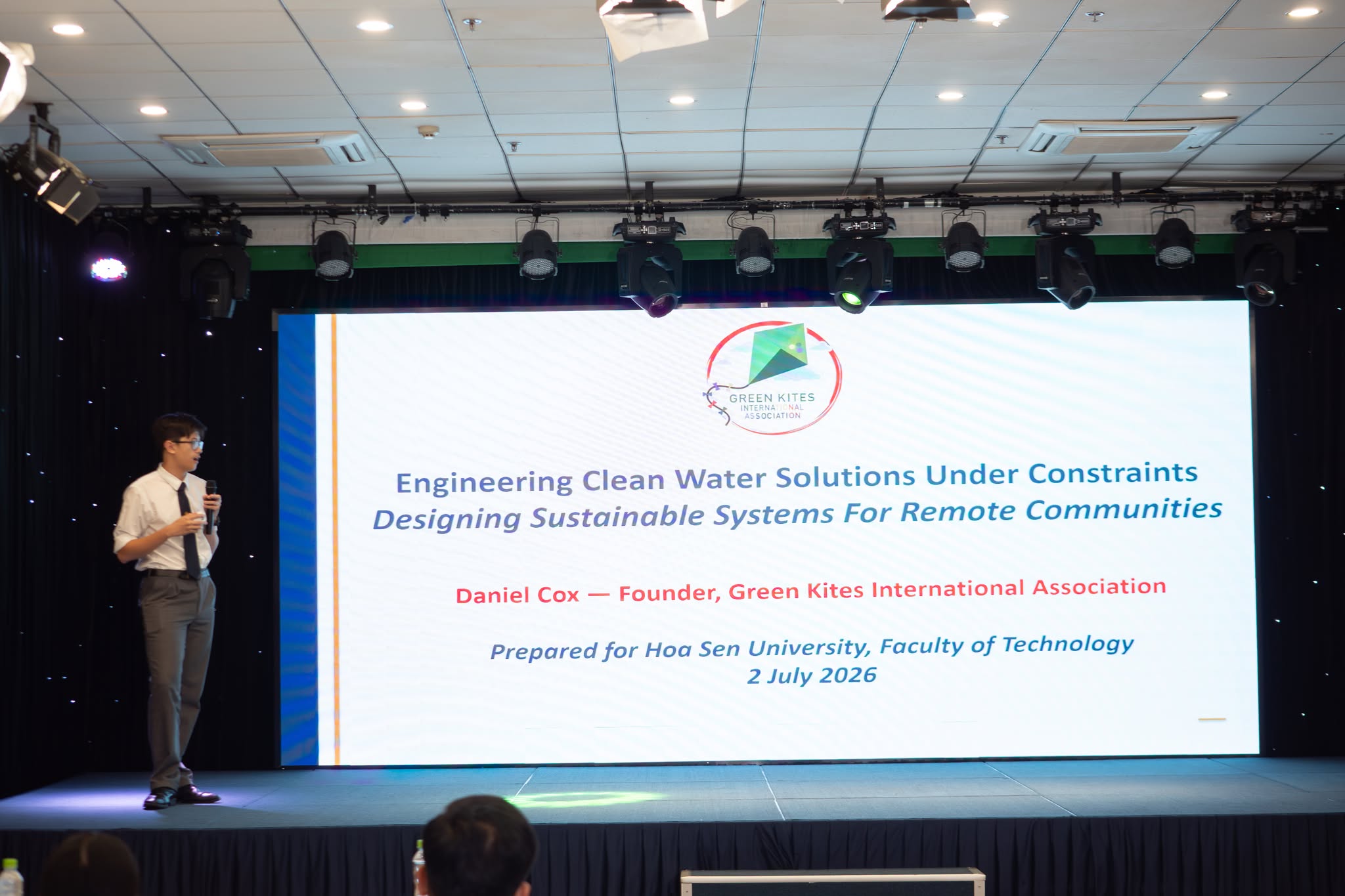
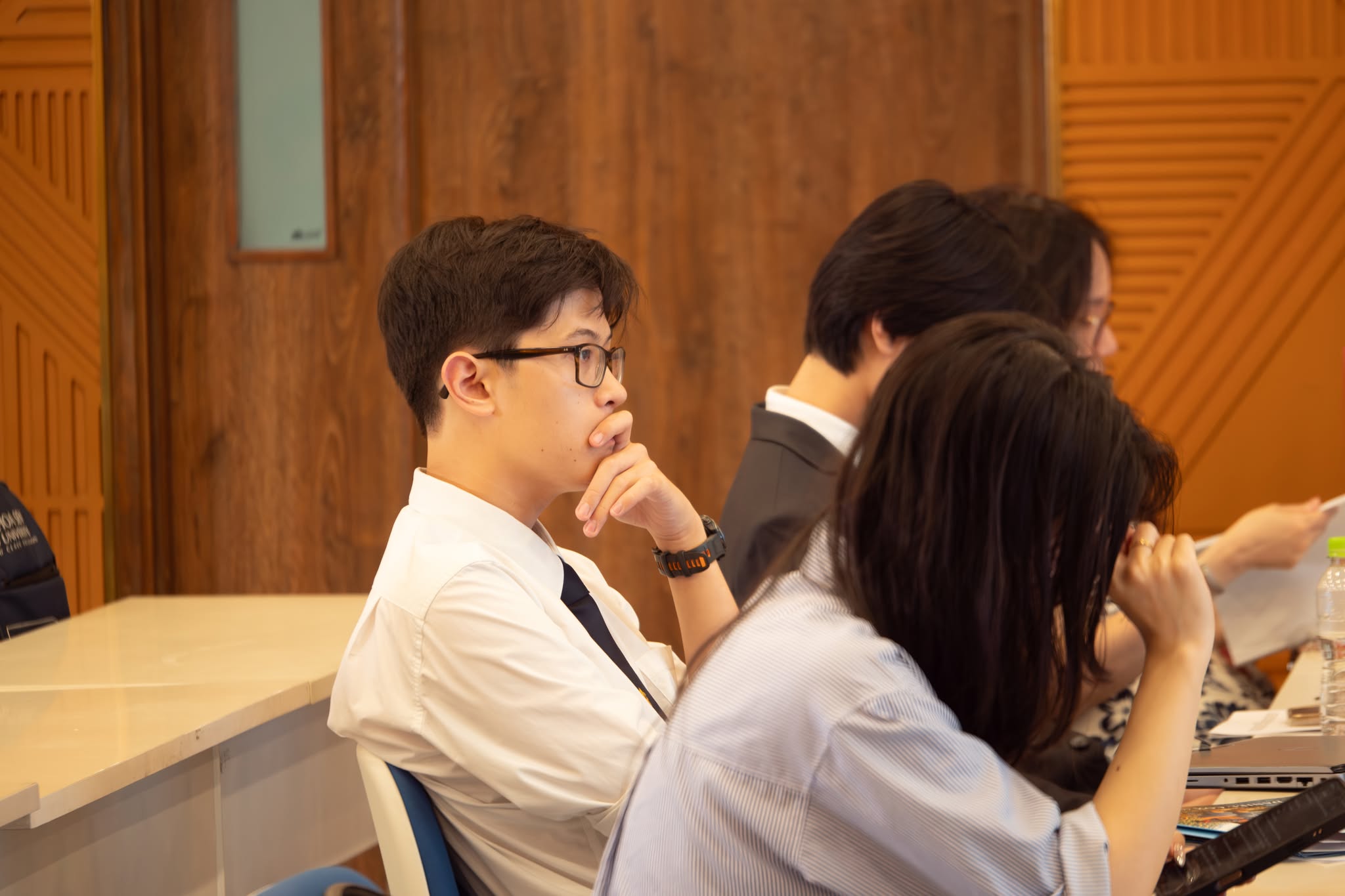
1 July 2026 — Hoa Sen University, Faculty of Technology, Ho Chi Minh City
Engineering Clean Water Solutions Under Constraints: Designing Sustainable Systems for Remote Communities
The presentation presented Green Kites’ approach to designing affordable, locally responsive and sustainable water systems for remote schools and communities.
Amplifying Impact Through Arts
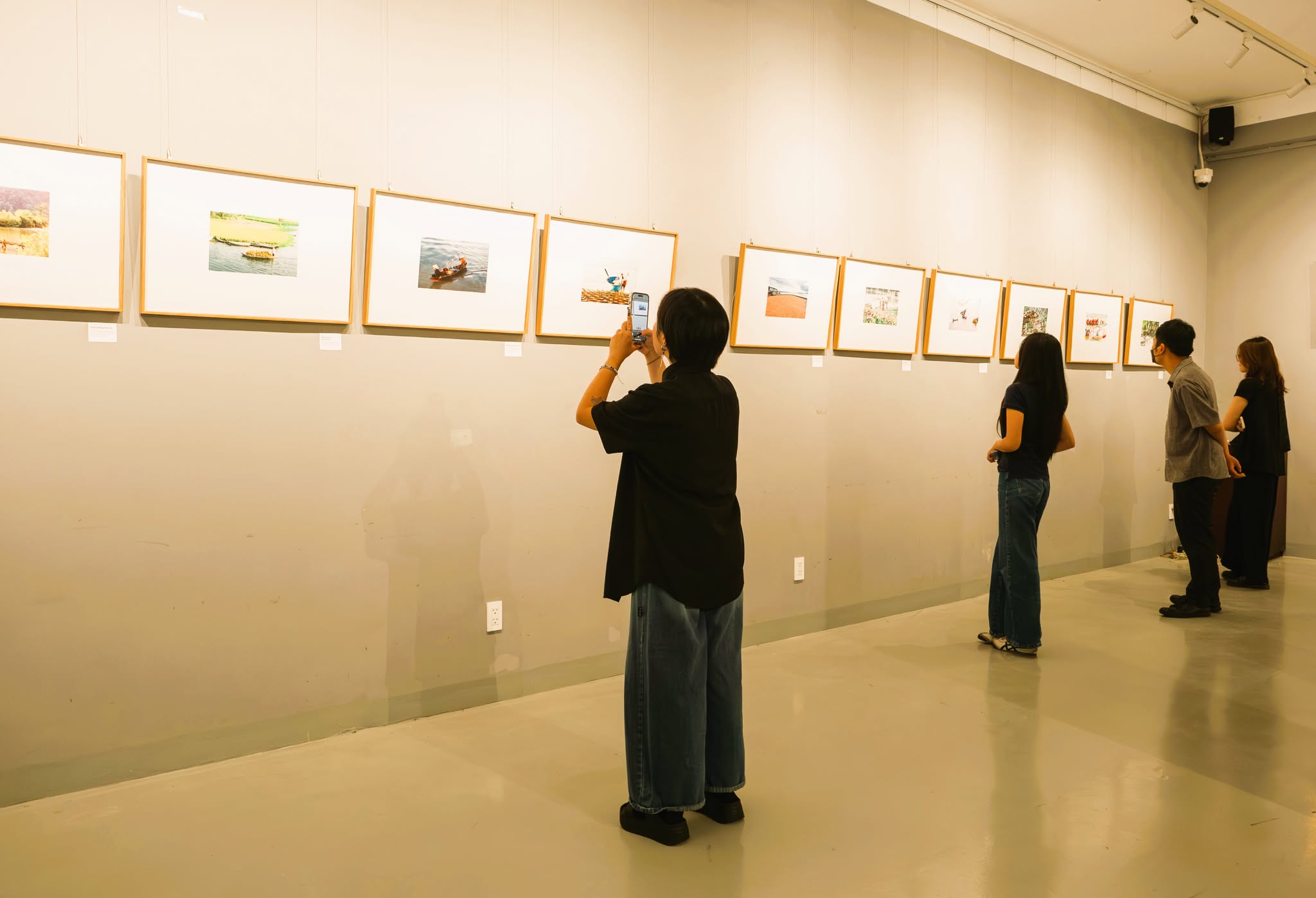
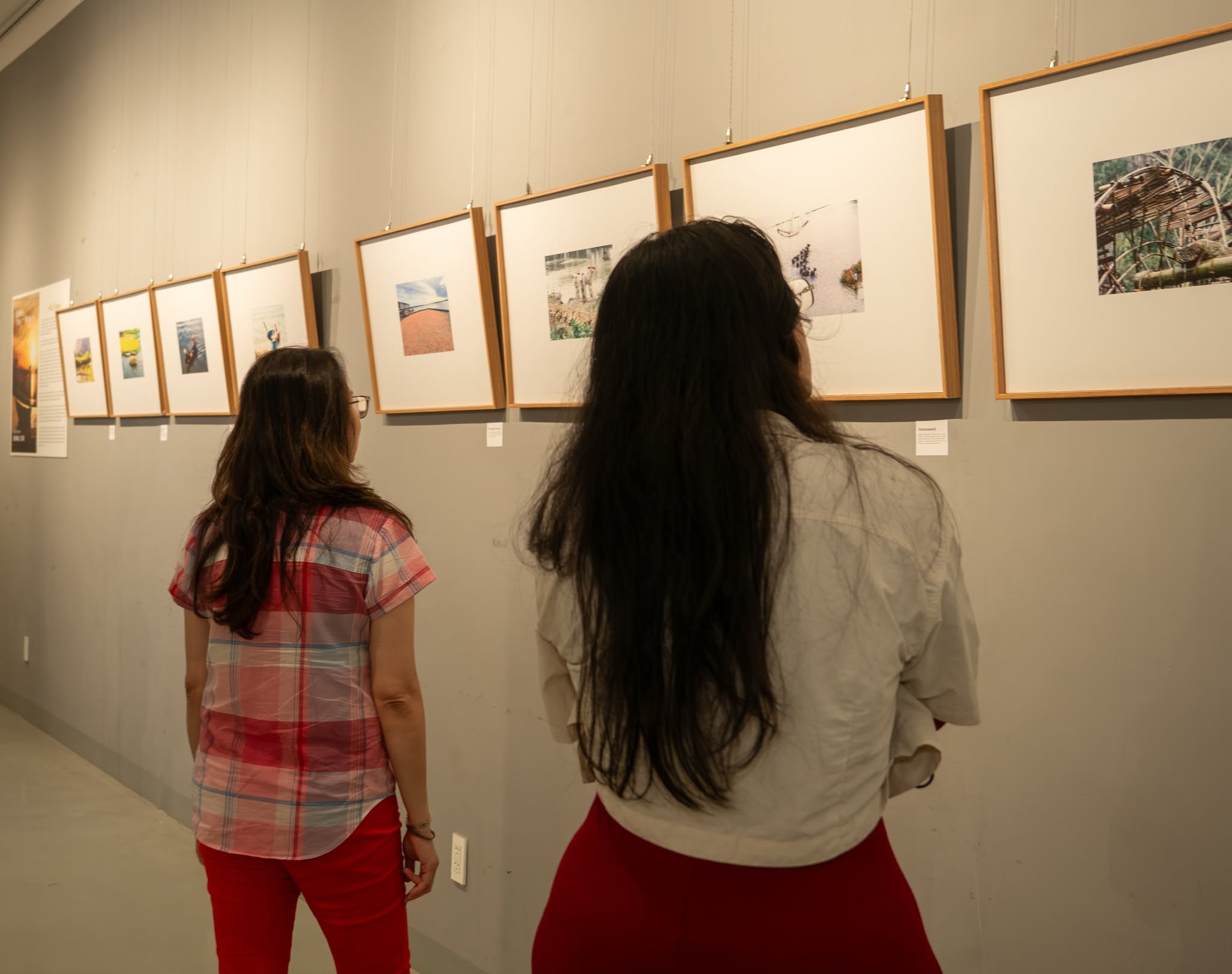
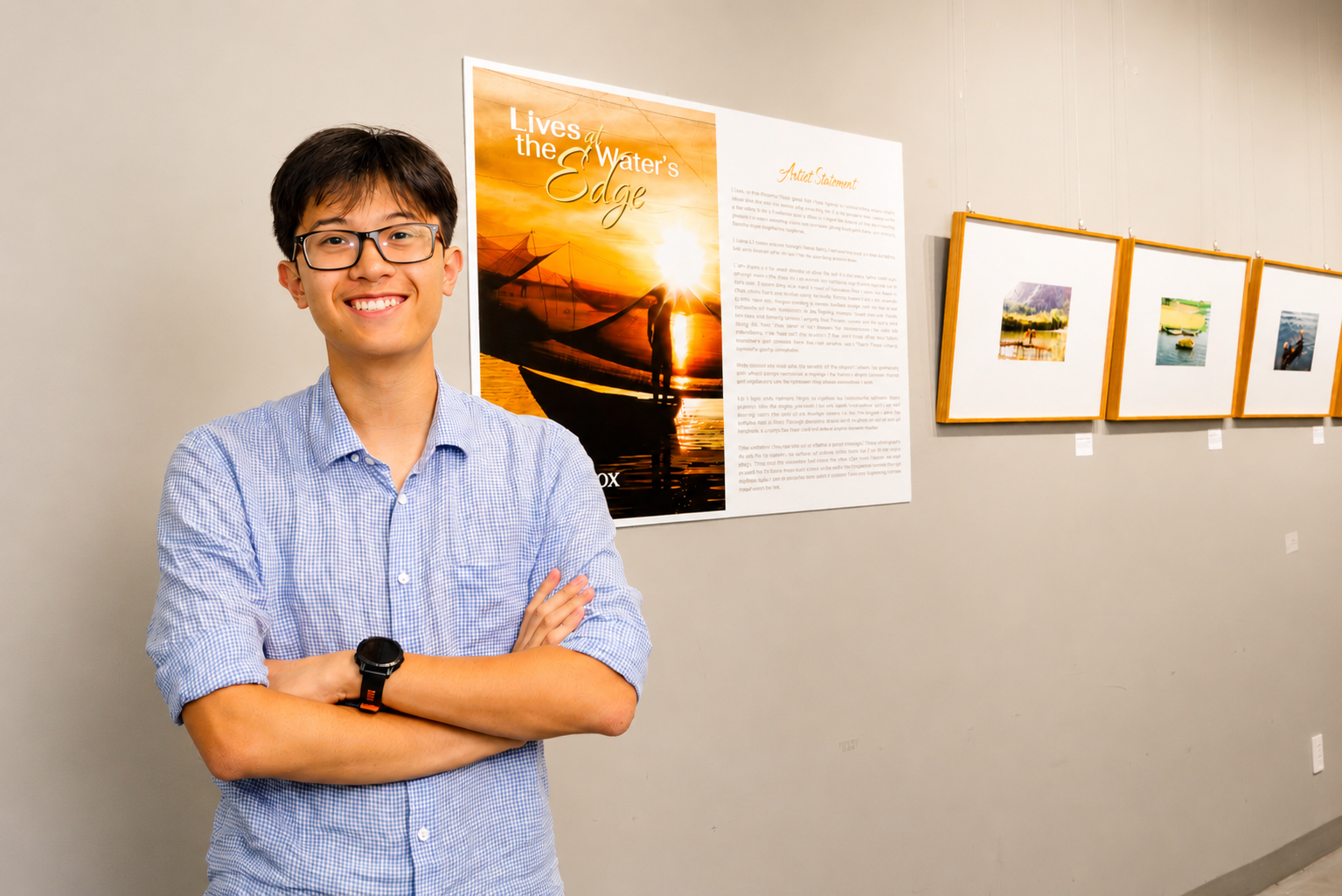
Art exhibition - Lives at the Water’s Edge
Solo Photography Exhibition by Daniel Cox, 2026
This exhibition explores everyday life in communities shaped by their close relationship with water. Through intimate photographs of daily routines, gestures and surroundings, Daniel reveals water not only as a source of livelihood and beauty, but also as a precious resource on which health, dignity and community life depend.
By documenting these quiet moments, the exhibition invites audiences to reflect on the fragility of water systems, the importance of conservation, and the responsibility we share to protect water for the communities and ecosystems that rely on it.
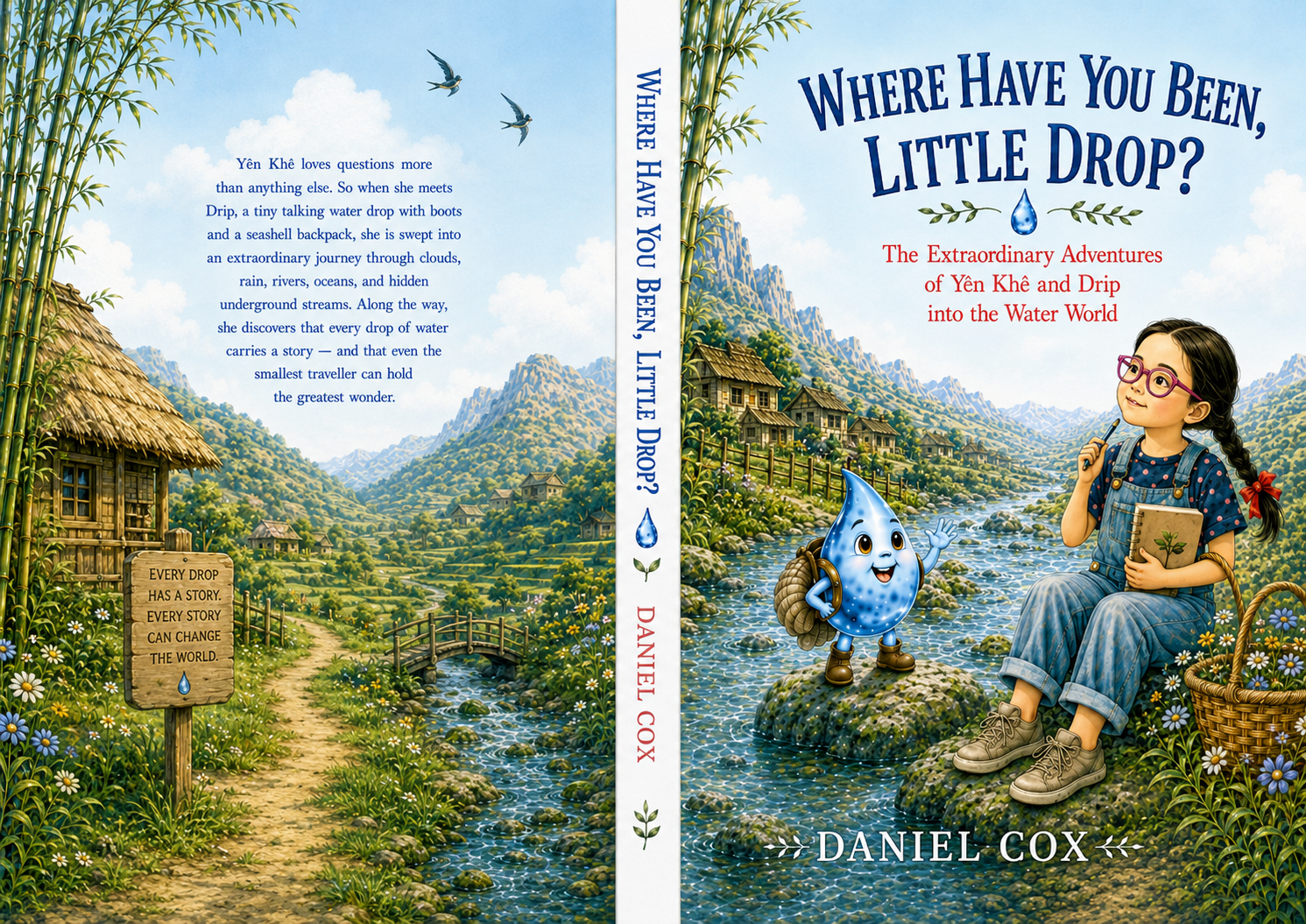
Publishing Children’s Adventure Books
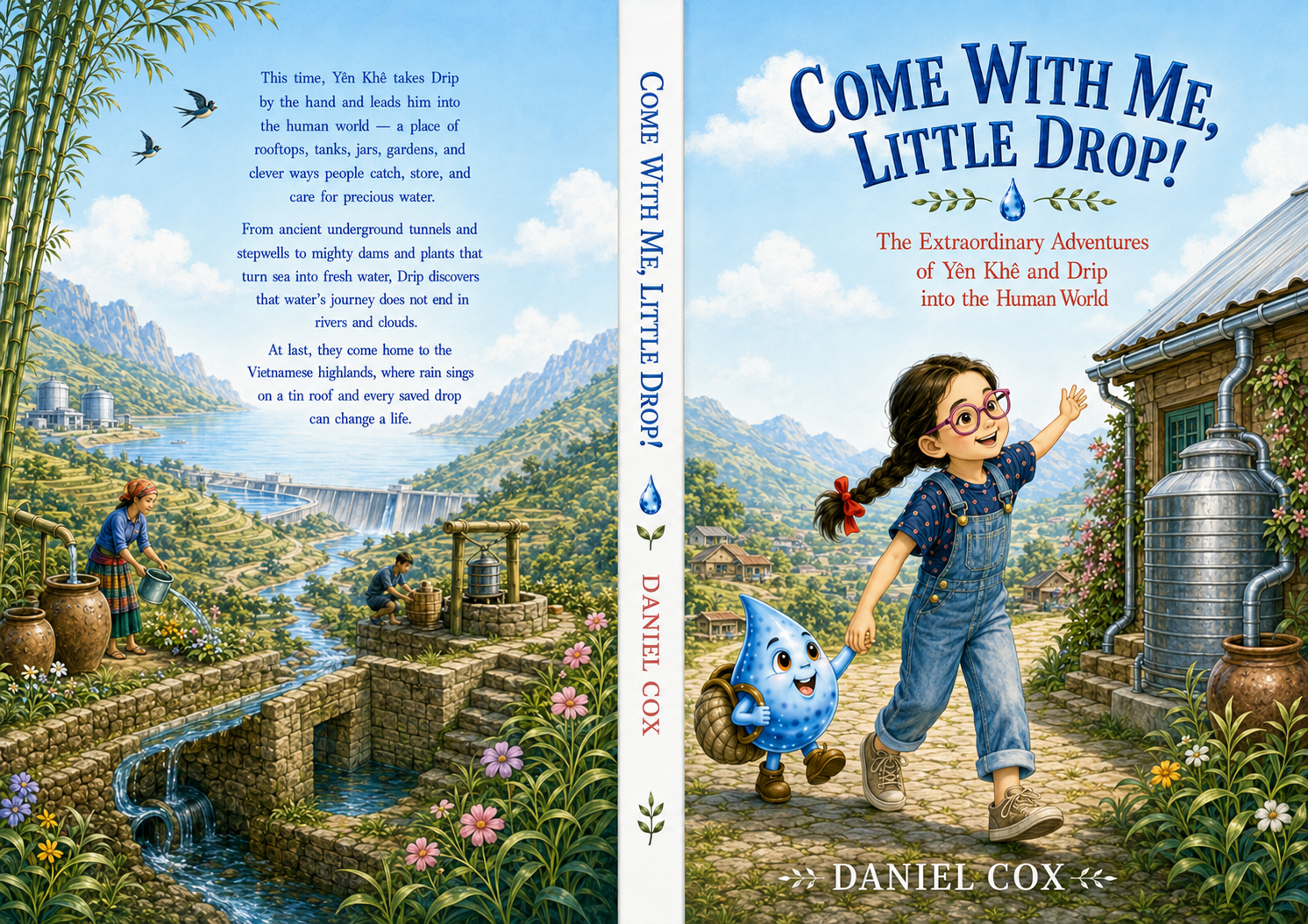
Publish two original children’s water-adventure books (create link) to teach children to value and conserve water as a precious, finite resource. Printed copies are distributed to participating schools, while digital copies are freely available on the Green Kites website.
Publishing WASH bilingual teaching resources
Water teaching resources
Create and distribute the Green Kites Water Teaching Resource, a ready-to-use series of 12 primary-school lessons developed by Daniel Cox in consultation with Northbridge Public School in Sydney and Sín Chéng Primary School in Lào Cai, Vietnam, with sponsorship from The Scots College. The resource is provided alongside every Green Kites school water system
Water safety resources
Developed by William Pham, the Green Kites CPR and First Aid Teaching Resource (create link) equips children, teachers, and community leaders with practical knowledge in emergency preparedness, CPR awareness, first aid, and injury prevention. Designed for use in schools and community workshops, the resource combines engaging illustrations, real-life scenarios, and interactive activities to help young learners build the confidence to respond safely in emergencies while strengthening community resilience.
References
World Bank (2021) Vietnam Water Security and Sanitation Sector Assessment. Available at: https://www.worldbank.org/en/country/vietnam/publication/vietnam-water-security-and-sanitation-sector-assessment (Accessed: 23 August 2025).
UNICEF & Ministry of Agriculture and Rural Development (2021) National Strategy on Rural Water Supply and Sanitation with Vision to 2045. Available at: https://www.unicef.org/vietnam/press-releases/national-strategy-rural-water-supply-and-sanitation-2030-vision-2045 (Accessed: 23 August 2025).
UNICEF (2019) Progress on Drinking Water, Sanitation and Hygiene in Schools: 2000–2018 Data Update. WHO/UNICEF Joint Monitoring Programme. Available at: https://data.unicef.org/resources/jmp-wash-in-schools-2019 (Accessed: 23 August 2025).
UNICEF (2022) Water, Sanitation and Hygiene (WASH) | UNICEF Vietnam. Available at: https://www.unicef.org/vietnam/water-sanitation-and-hygiene-wash (Accessed: 23 August 2025).
UNICEF (2023) Formative Research on Rural Water Supply, Sanitation, Hygiene, and Nutrition in Viet Nam. Available at: https://www.unicef.org/vietnam/reports/formative-research-rural-water-supply-sanitation-hygiene-nutrition-viet-nam (Accessed: 23 August 2025).
Children of Vietnam (2020) WASH in Schools. Available at: https://childrenofvietnam.org/wash-in-schools (Accessed: 23 August 2025).
DTiNews (2020) Thousands of Vietnamese students return to school without running water. Available at: https://dtinews.dantri.com.vn/vietnam-today/thousands-of-vietnamese-students-return-to-school-without-running-water-20200505200118727.htm (Accessed: 23 August 2025).