The Challenge
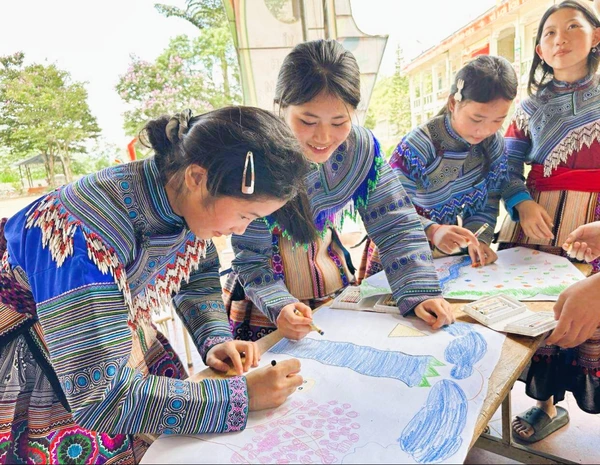
In many remote and rural areas of Vietnam, access to digital technology remains limited, particularly in primary and lower secondary schools. While national education reforms emphasise digital literacy and ICT integration, significant gaps persist between urban and rural regions due to shortages in equipment, infrastructure, and trained support (UNESCO, 2022; Nhung, 2025). For students in disadvantaged communities, schools are often the only possible point of access to computers and the internet (Le at al., 2023).
UNESCO and other regional analyses highlight that limited access to digital tools restricts students’ opportunities to develop essential skills, including information literacy, problem-solving, and basic computational thinking—skills increasingly required for further education and employment (UNESCO, 2022; Dao, 2022).
Without functional computer laboratories, rural students risk being excluded from digital learning pathways, further reinforcing cycles of educational inequality (Dao, 2022).
Our Response
Building access to digital learning
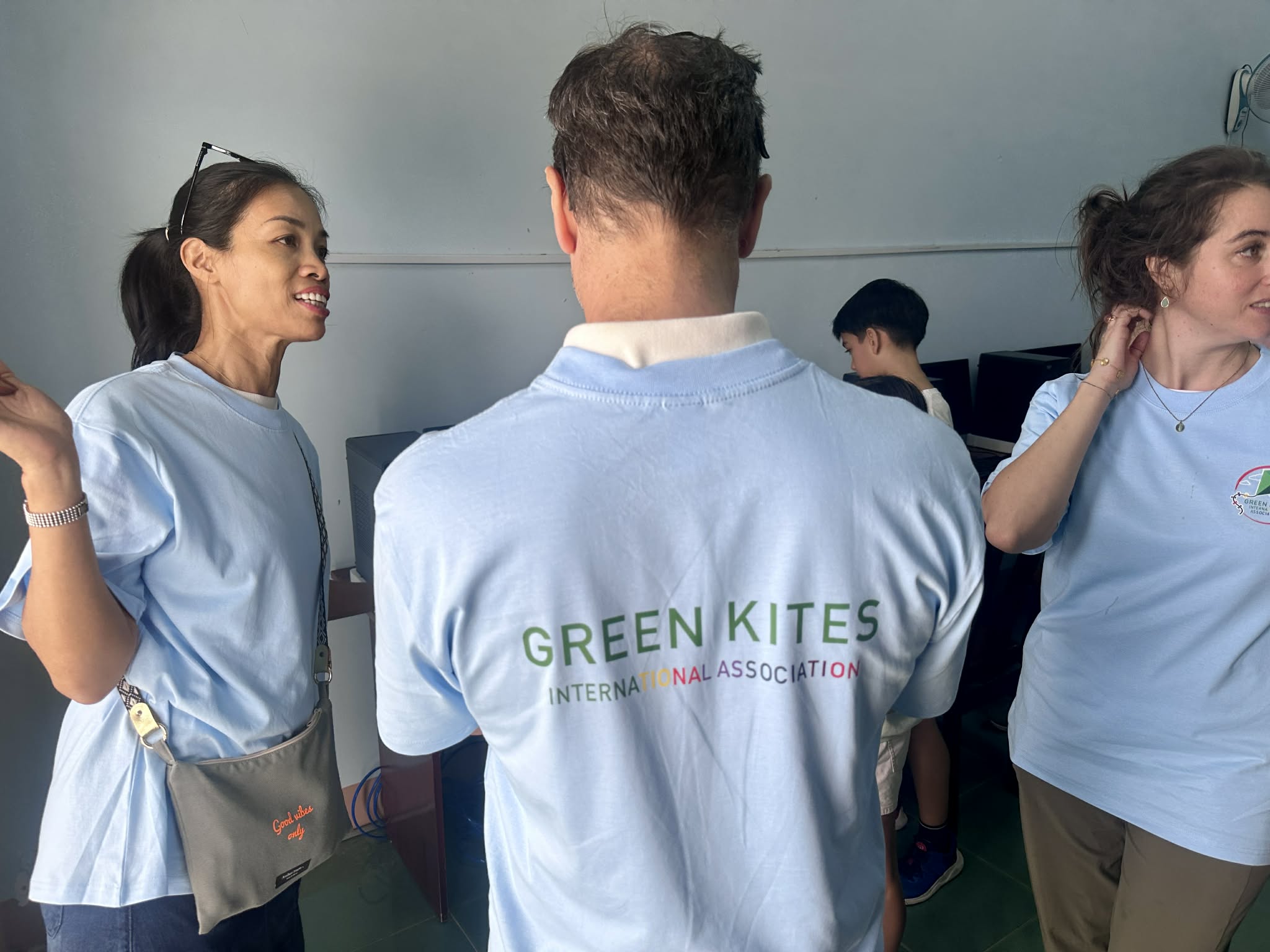
Green Kites International Association (GKIA) supports the development of school-based computer laboratories that provide reliable, shared access to digital learning resources in communities where such facilities are absent or inadequate. These laboratories are designed to be practical, durable, and appropriate for resource-constrained environments, prioritising functionality, ease of maintenance, and alignment with local teaching capacity.
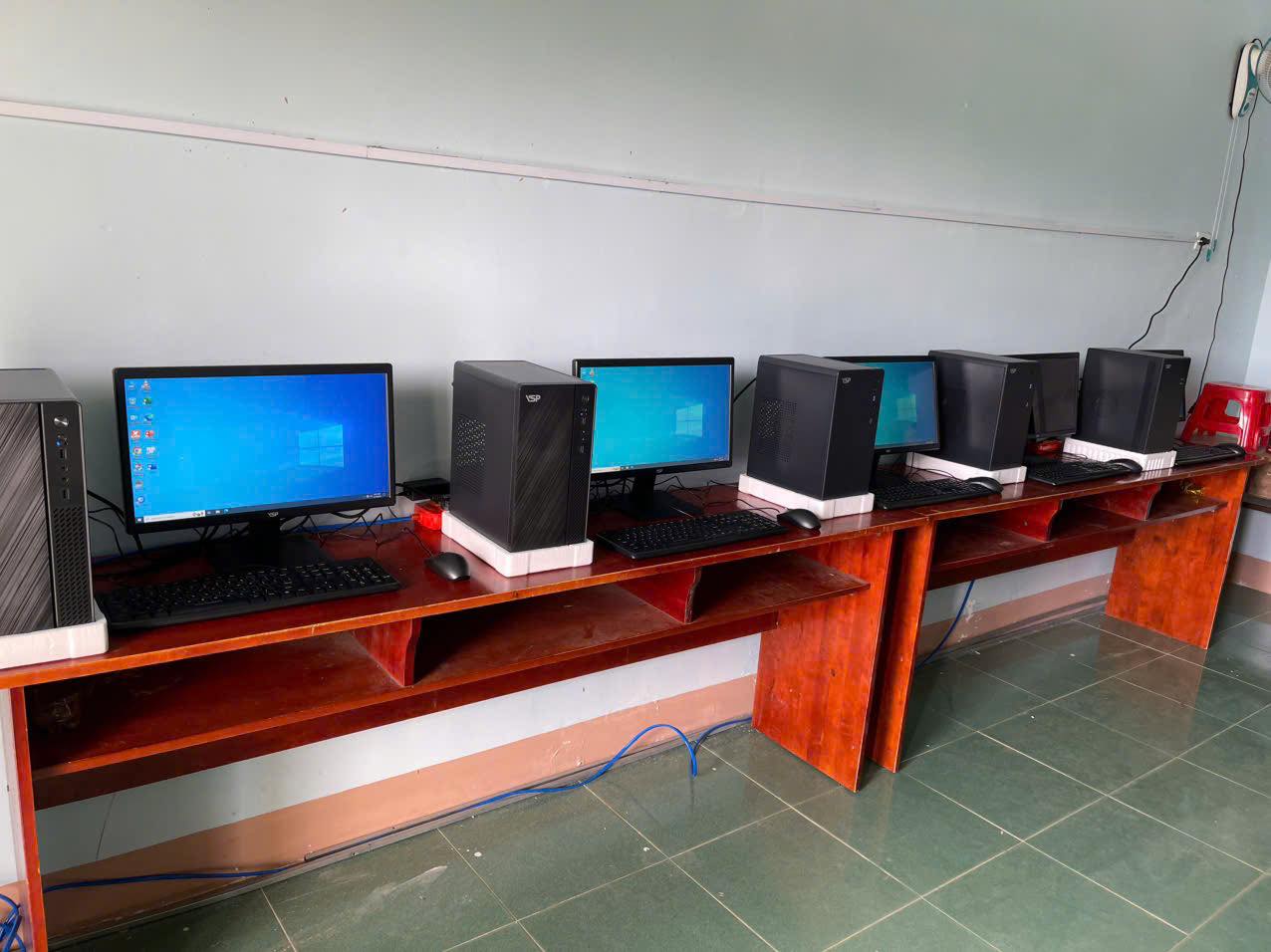
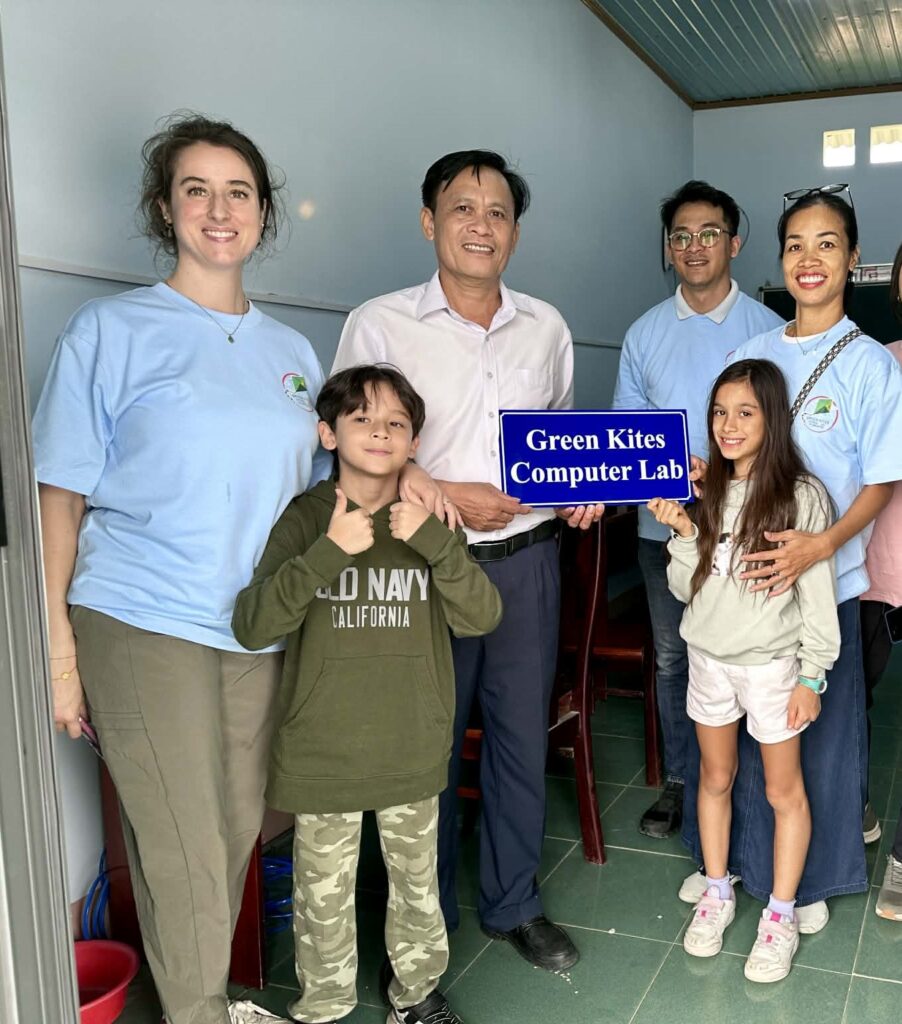
In December 2025, GKIA financed the establishment of a computer laboratory at Phan Bội Châu Primary School, Kruẽ Branch, Đắk Lắk Province, equipping the school with five computers.
Our Impact
This initiative now benefits 55 students, enabling regular access to basic ICT skills, educational software, and digital learning opportunities that were previously unavailable.
Beyond infrastructure, the computer laboratory serves as a long-term community asset, supporting both students and teachers and helping to bridge the digital divide faced by children in remote regions. The project reflects GKIA’s commitment to practical, scalable solutions that expand educational opportunity.
References
Dao, N. D., Phan, T. H., & Chau, H. M. T. (2022). Tackling unequal access to digital education in Viet Nam during the COVID-19 pandemic (ADBI Development Case Study No. 2022-3). Asian Development Bank Institute. https://www.adb.org/sites/default/files/publication/824536/adbi-case-study-2022-no-3-viet-nam-final-proof.pdf
Lê, A. V., Lương, M. P., Đỗ, Đ. L., Trần, M. N., & Bui, T. D. (2023). Technology in education: A case study on Viet Nam (ED/GEMR/MRT/2023/SA/P1/11). UNESCO & Viet Nam National Institute of Educational Sciences. https://doi.org/10.54676/GPDF6007
Nhung, N. T. H. (2025). Digital transformation in Vietnam’s education: Opportunities and challenges. Malque Publishing. https://malque.pub/ojs/index.php/mr/article/download/7133/3532/46693